Installing a radon mitigation system can feel like the end of a household problem. The equipment is in place, the installer has left, and an earlier report may show that radon levels dropped. Over time, however, the testing paperwork can disappear while the system remains in use.
For homeowners maintaining New York radon systems, the question is when the air was last tested and what has changed since then. A useful maintenance plan connects the installation record, follow-up measurements, and later work on the home.
Find the Test Completed After Installation
Start by locating the radon measurement taken after the system began operating. An installation invoice establishes that work was performed; it does not provide a radon concentration.
EPA’s consumer guide to radon reduction recommends a test within 30 days of installation, beginning no sooner than 24 hours after the system starts operating. It recommends a two- to seven-day measurement to check initial effectiveness and an independent follow-up measurement if the installer performs the initial test.
Check the report’s address, test location, dates, and result. If you bought the home with the system already installed, ask for the actual report rather than relying on a description in an old listing.
When that record cannot be found, arrange a current measurement and mark the installation test as unavailable. A new result cannot reconstruct conditions from several years earlier.
Understand What the System Gauge Shows
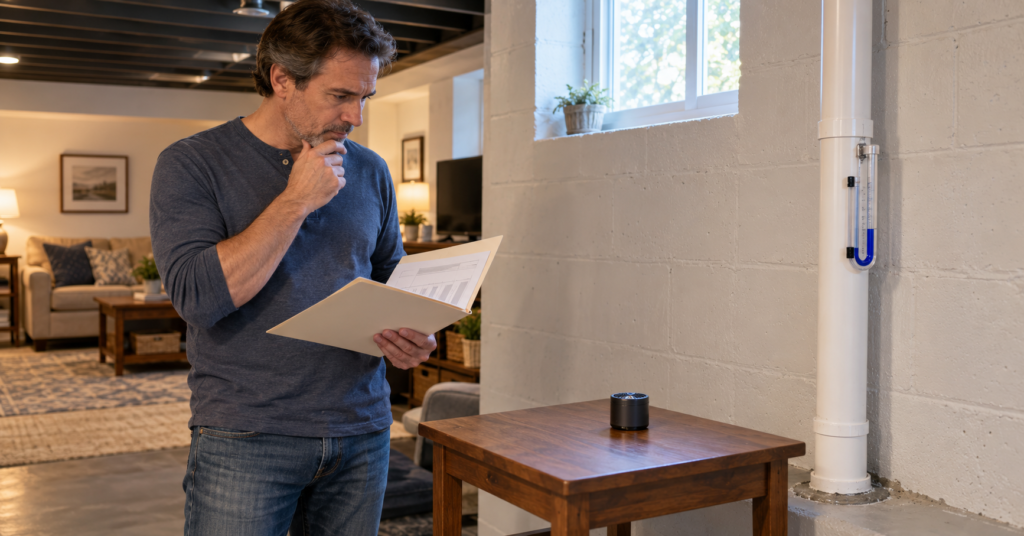
Many active systems have a small liquid-filled gauge attached to the pipe. This manometer indicates a pressure difference associated with system operation. It does not measure the amount of radon in the indoor air.
Government guidance specifically warns that a mitigation-system manometer cannot establish radon concentrations; that requires radon testing.
Ask the installer to explain the expected reading for your particular system and what a change would mean. Avoid comparing it with a photograph of someone else’s equipment.
Keep the gauge visible and follow the operating instructions for checking it. Report an alarm or an unexpected reading to a qualified radon professional. Fan-powered mitigation systems are intended to operate continuously, so switching one off to reduce noise or electricity use undermines its operation.
Set a Two-Year Retesting Reminder
The New York State Department of Health recommends testing every two years when a home has a radon mitigation system. Its general five-year testing recommendation should therefore not become the default schedule for a home with installed mitigation.
Record the next routine testing date when you receive a result. Include enough lead time to obtain a kit or arrange an appointment.
Make reviewing that date part of your annual home maintenance routine. The annual review is simply a chance to check whether the measurement is coming due, whether the report is accessible, and whether another household member knows where it is stored.
If testing is already overdue, arrange it now rather than starting a fresh two-year countdown without a measurement.
Reassess After Renovations or Changes in Basement Use
The calendar is only one reason to retest. New York health officials also recommend testing again after remodeling or weatherizing a home.
Tell your radon professional about planned foundation work, basement finishing, or changes affecting the existing system. Include this conversation while the project scope is still being developed.
Changes in how you use a room also matter. Moving a home office into the basement can increase the time someone spends downstairs without involving major construction. CDC recommends testing before changes that will cause occupants to spend more time on a lower level, and before and after renovations.
For example, an upstairs measurement taken before converting a basement into a daily workspace should not automatically become the reference for that new use. Identify the intended occupied area when arranging the test.
Choose a Test That Answers the Right Question
Short-term and long-term measurements serve different purposes. CDC describes short-term tests as lasting two to 90 days, while long-term tests run for more than 90 days and better reflect the home’s average radon level over time.
Tell the tester whether you are checking a recent installation, completing routine retesting, or investigating an elevated result. Follow the duration specified for the selected method.
A few days of readings and several months of readings should be labeled clearly when you compare reports. Include the season and room location so differences are easier to interpret.
If there is a suspected malfunction, contact the professional responsible for the system promptly. Discuss the testing and repair sequence instead of allowing a long measurement period to postpone an equipment assessment.
Protect the Testing Conditions
Even a suitable test can become difficult to interpret if its placement or conditions change halfway through.
Follow the device instructions and the testing professional’s directions. EPA’s homeowner guidance recommends testing in the lowest lived-in level, in a regularly used room, away from drafts, excessive heat, and humidity. A kitchen or bathroom is unsuitable for the placement described in that guidance.
For a short test lasting two or three days, EPA advises closing windows and outside doors at least 12 hours beforehand and maintaining closed-house conditions during testing, apart from normal entry and exit. It also advises against these brief tests during unusually severe storms or high winds.
Explain the arrangements to everyone in the household. Leave the device in place for the instructed period, complete the required details, and return any laboratory kit according to its directions.
If someone moves it or leaves windows open, tell the laboratory or tester what happened. Let them determine whether another measurement is needed.
Respond to an Elevated Result
A higher result deserves follow-up even when equipment appears to be operating normally. Send the report to a qualified radon professional and explain any recent building work or system problems.
EPA recommends reducing radon when a long-term result, or the average of two short-term results, is at least 4 picocuries per liter, written as pCi/L. Levels below that point still carry risk, and reductions may also be considered between 2 and 4 pCi/L.
Ask which confirmation test or system assessment is appropriate for your result. Do not combine measurements from unrelated rooms or distant years into an informal average.
When work is proposed, clarify what will be checked, what adjustments are included, and who will arrange the measurement afterward. Keep equipment troubleshooting and the verification of indoor radon levels as identifiable parts of the job.
Keep a Record That Survives Repairs and Ownership Changes
Create one folder for the installation agreement, operating instructions, test reports, and service visits.
For each measurement, save the date, room, test duration, result, and any reported interruption. For repairs, identify the work performed and the person or business responsible. Keep older reports rather than replacing them with the newest number.
This makes a later conversation more useful. You can explain that a measurement followed a basement renovation or that a fan replacement occurred between two tests.
If another household member takes over maintenance, they should be able to find the next testing date and the system contact without rebuilding the history.
Note: Testing recommendations depend on the measurement method and circumstances of the home. For statewide information and help finding appropriate testing resources, consult the New York State Department of Health’s radon guidance.