A photograph of your living room may show a television, sofa, and bookcase. After a loss, however, that image might leave important questions unanswered: which television model was it, how old was the sofa, and what was stored inside the cabinet?
Home inventory photos become more useful when they connect visible belongings with clear descriptions and supporting records. Insurance regulators recommend documenting details such as purchase dates, models, serial numbers, and values alongside photographs.
You can build that record gradually, starting with one room and a system you can maintain.
Photograph Items at More Than One Distance
Begin with an overview of each room, then add closer photographs of important belongings. Each view serves a different purpose:
| Photograph | What it helps establish |
|---|---|
| Room overview | Where belongings were located and how the space was furnished |
| Individual item | Its appearance, size, finish, and visible condition |
| Identification label | The model, serial number, or other identifying information |
| Distinctive detail | Features such as an engraving, maker’s mark, or unusual material |
Use steady lighting and check that small print is readable before moving on. A blurry label may be impossible to recover later.
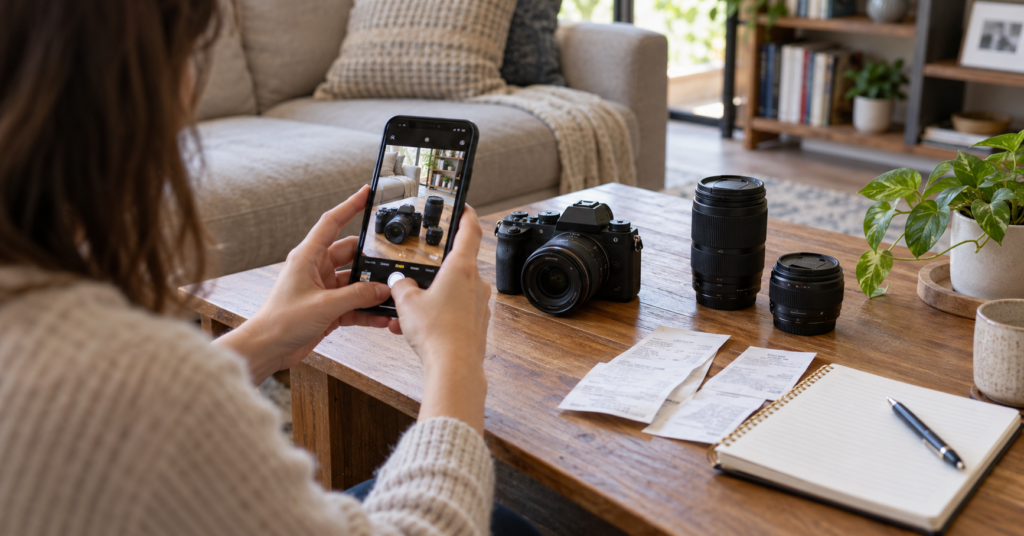
For a camera kit, photograph the camera body and individual lenses. A picture of the closed carrying case gives little information about its contents.
A slow video can help record a room and explain what you are showing. Supplement it with still images where labels or small details are difficult to read. Government home inventory guidance recommends adding dates and relevant information to photographs.
Include Storage Areas and Everyday Possessions
Open drawers, cupboards, wardrobes, and storage containers as you work through the home. Closed furniture can hide much of what would need replacing.
Include kitchenware, bedding, clothing, hobby supplies, tools, and seasonal equipment. Government preparedness guidance specifically highlights belongings such as holiday decorations, sports equipment, and items kept in storage facilities.
For ordinary items, use clear group descriptions with quantities where practical. “Eight cotton bath towels” provides more information than “bathroom contents.” Record valuable or unusual pieces individually.
Keep track of sets and accessories without counting them twice. If a tool kit is listed as one complete purchase, explain which pieces it includes before adding separate entries.
Also identify belongings owned by someone else, such as borrowed equipment. Ask the insurer how those items should be handled rather than assuming everything photographed belongs in your personal-property claim.
Connect Pictures to Purchase and Ownership Records
Give each significant item a simple reference, such as “Living Room 01,” and use that reference for its photographs and supporting documents.
A spreadsheet or written list can connect the item’s description, acquisition date, purchase price, and evidence. The exact format matters less than being able to find the records together.
Save receipts when available. Other useful records may include invoices, order confirmations, warranty documents, canceled checks, and bank or credit-card statements. The Kansas Insurance Department’s inventory guide lists several of these supporting documents.
A card statement showing a payment to a department store may help establish a transaction, but may not identify which items were purchased. Pair it with an itemized record if you can obtain one.
For gifts, inherited possessions, or older purchases without receipts, record what you know about how and when you acquired them. Ask the insurer what alternative evidence it will consider. Mark uncertain dates or amounts as estimates.
Preserve Dates, Condition, and Original Files
Record the date you photographed an item separately from the date you acquired it. If you bought something secondhand, its age may be greater than the time you have owned it.
Use descriptions that reflect the item’s actual condition. Note existing damage, repairs, or modifications where relevant.
Keep original image and video files. If you make a cropped or annotated copy to highlight a label, retain the original alongside it. Avoid filters or editing that changes the appearance of the belongings.
Check that your camera’s date setting is accurate. A dated folder and a short inventory note can provide additional context, particularly when photographs come from several devices.
Review videos before filing them away. Confirm that the recording opens, the narration is understandable, and you can identify the objects being discussed. Discovering an unreadable file during inventory work gives you a chance to replace it.
Separate Evidence of Ownership From Insurance Coverage
A detailed photograph can support your description of an item. It does not increase the policy’s limits or establish that a particular cause of loss is covered.
Check how your policy values personal property. Replacement-cost coverage generally considers the cost of repair or replacement, while actual-cash-value coverage accounts for depreciation. Deductibles, limits, exclusions, and settlement conditions still matter.
Keep original purchase prices separate from estimates of current replacement cost. If you research a comparable item, record its specifications and the date of the comparison.
Jewelry, artwork, and other valuable categories may have special limits or need additional coverage. Ask whether an appraisal or more detailed description is appropriate and whether the item is covered as intended.
Photographing a valuable possession and adding it to your inventory does not, by itself, add it to a policy endorsement.
Keep a Backup You Can Access After a Loss
An inventory saved only on a phone or computer inside the house may become unavailable during the same event that damages your belongings.
Maintain a separate copy in secure storage away from the property or in protected online storage. Keep the inventory, supporting documents, policy details, and claims contact information accessible together. Government guidance recommends safeguarding the inventory and its photographs in secure storage.
Test whether you can retrieve a sample photograph and receipt from another device. Check your account-recovery arrangements so access does not depend entirely on the phone you might lose.
Keep folders private. Home inventory files can reveal valuable possessions, the layout of your home, and personal information on receipts.
If a trusted household member may need the records, agree on how they can access them. An unexplained folder or an unknown password can make an otherwise complete backup difficult to use.
Update the Record When Your Belongings Change
Review the inventory at least annually and after significant purchases. Insurance-department guidance recommends both regular reviews and updates when major items are added.
Record when an item is sold, donated, replaced, or moved to another location. Preserve older versions as dated archives so the current inventory remains clear.
For replacements, close out the old entry and create a new one with the correct purchase details. Two similar televisions photographed in different years should not appear to be two currently owned items if one replaced the other.
You can make this review part of your annual home maintenance routine, alongside checking equipment records and warranties.
Use the Inventory to Prepare the Claim
After a loss, follow the insurer’s reporting instructions and ask which forms and supporting records are needed. Provide photographs and documents that relate to the affected items.
Use the inventory to distinguish what was damaged, destroyed, or stolen from possessions that remain unaffected. Keep any new damage photographs separately dated from the earlier inventory.
If details are missing, explain the gap and identify what is known or estimated. Save the submitted inventory, correspondence, and any later corrections so you can follow how the claim develops.
Note: This article provides general information. Evidence requirements and claim payments depend on the policy, the circumstances of the loss, and applicable rules. An inventory supports documentation but does not guarantee coverage or payment. For a practical reference, see this government personal home inventory guide.