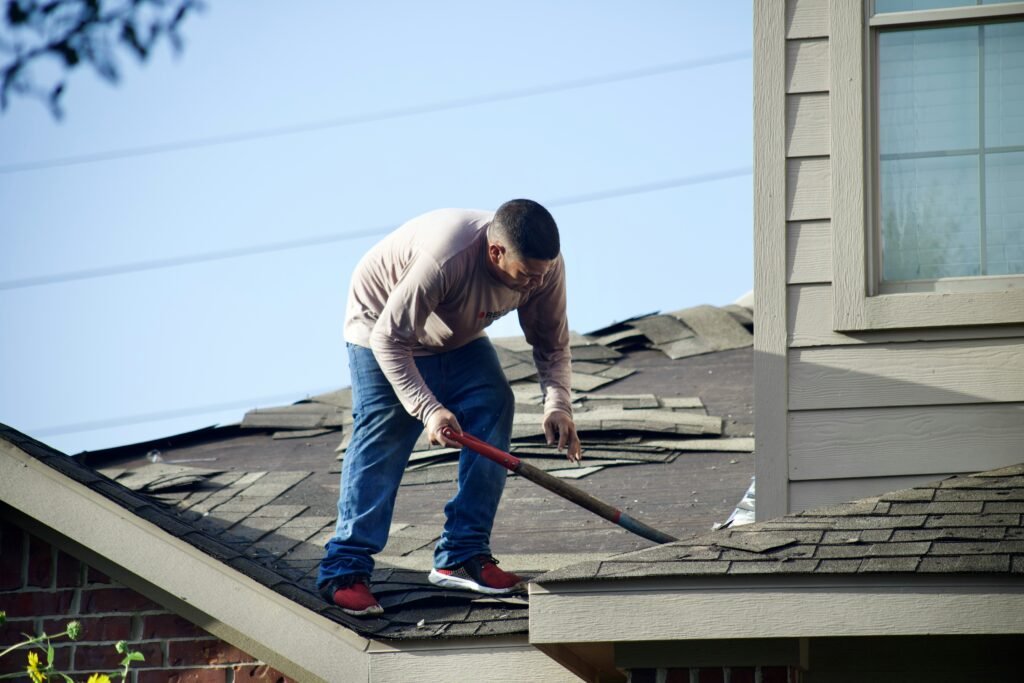
An aging roof does not always need to be replaced immediately. A localized leak, damaged flashing or a small area affected by a storm may be repairable when the rest of the roofing system remains in good condition.
Replacement may make more sense when deterioration is widespread, leaks repeatedly return or the underlying roof deck has been damaged. The roof’s age matters, but it should not be the only factor in the decision.
Knowing when to repair or replace an aging roof requires an evaluation of the roofing material, installation, damage, remaining service life and cost of continued repairs.
Why Roof Condition Matters
A roof is a system rather than a single visible surface.
Depending on the home, it may include:
- Roof covering
- Underlayment
- Roof deck
- Flashing
- Fasteners
- Valleys
- Drip edges
- Vents
- Skylights
- Chimney connections
- Gutters
- Drainage components
A repair that addresses only the visible covering may not solve a failure in the flashing, underlayment or roof deck.
Ongoing leaks can damage:
- Insulation
- Ceilings
- Walls
- Electrical components
- Framing
- Interior finishes
- Personal property
The Environmental Protection Agency advises homeowners not to ignore wet spots or water stains because unresolved roof leaks and water damage can worsen. EPA mold house tour
How Long Should a Roof Last?
There is no universal roof lifespan.
Service life depends on:
- Roofing material
- Product quality
- Installation
- Roof slope
- Ventilation
- Climate
- Sun exposure
- Storm frequency
- Nearby trees
- Maintenance
- Drainage
- Previous repairs
Two roofs installed in the same year may age very differently.
A shaded section may retain moisture, while a sun-exposed slope may experience greater heat and ultraviolet deterioration. A roof in a hail- or wind-prone region may also require replacement sooner than the same material in a milder climate.
Use age as a signal to increase inspection and financial planning, not as automatic proof that replacement is required.
Signs That a Roof May Need Attention
Missing or Displaced Materials
Missing shingles, tiles or panels leave the underlying system more exposed to weather.
A small affected area after one storm may be repairable. Missing materials in several locations may indicate broader fastening, aging or wind-resistance problems.
Temporary covering can reduce immediate water entry, but it is not a permanent repair.
Curling, Cracking or Deterioration
Roofing materials can curl, crack, split or lose protective surfaces as they age.
A few damaged pieces may be replaceable. Similar deterioration across several slopes may indicate that the roof covering is reaching the end of practical service.
The material type matters. Asphalt shingles, wood, tile, slate, metal and membrane roofs age differently and require different evaluation methods.
Granules Collecting in Gutters
Asphalt roofing can shed granules over time. Some loss can occur naturally, especially after installation or severe weather.
Heavy, uneven or increasing loss may indicate deterioration.
Check whether:
- Bare areas are visible.
- Granules collect repeatedly.
- One slope appears more affected.
- Hail or debris recently struck the roof.
- Shingles have become brittle.
Granule accumulation alone does not establish that complete replacement is necessary.
Damaged Flashing
Flashing helps prevent water entry at roof transitions and penetrations.
It may be located around:
- Chimneys
- Skylights
- Vents
- Valleys
- Dormers
- Walls
- Roof edges
Loose, corroded, cracked or poorly installed flashing is a common source of leaks.
When the surrounding roof remains sound, correcting the flashing may be sufficient. Repeated flashing failures can indicate a design or installation problem requiring broader work.
Sagging Areas
A visibly sagging roof line may indicate:
- Roof-deck deterioration
- Structural movement
- Excessive loading
- Long-term moisture
- Framing problems
- Installation defects
Sagging should not be treated as a cosmetic issue.
Avoid entering an area where the ceiling or roof appears unstable. A qualified structural or roofing professional should evaluate the condition promptly.
Water Stains and Interior Leaks
Possible signs of a roof leak include:
- Brown or yellow ceiling stains
- Damp insulation
- Peeling paint
- Mold-like growth
- Water near roof penetrations
- Musty attic odors
- Wet framing
- Rusted fasteners
- Dripping during rain
The visible stain may be far from the actual roof opening because water can travel along framing and other materials.
A stain can also result from plumbing or condensation. Confirm the source before authorizing roof work.
Repeated Repairs in the Same Area
A repair that fails repeatedly may indicate that:
- The original source was misidentified.
- The affected area is larger than expected.
- Flashing was not corrected.
- Materials are too deteriorated to hold a repair.
- Water is entering from another location.
- The roof design creates recurring problems.
Continuing to patch the visible symptom can cost more than correcting the underlying section.
Daylight Visible in the Attic
Daylight through the roof may indicate an opening, missing material or an intended vent.
Do not assume every visible light source is a defect. Roof and soffit ventilation can be part of the design.
Unexplained daylight combined with staining, damaged underlayment or evidence of water entry should be evaluated.
Moss, Algae or Vegetation
Growth on a roof may retain moisture or interfere with drainage.
Do not remove moss aggressively with tools or pressure washing unless the roofing material and manufacturer allow it. Improper cleaning can damage the covering.
Vegetation does not automatically require replacement, but it may conceal deterioration or indicate a consistently damp area.
Loose or Exposed Fasteners
Fasteners can loosen, corrode or become exposed as roofing materials move and age.
Possible consequences include:
- Water entry
- Loose panels
- Wind vulnerability
- Material displacement
Simply covering fasteners with sealant may not correct the reason they failed.
When a Roof Repair May Be Appropriate
The Damage Is Localized
Repair may be reasonable when damage affects a limited area and the surrounding roof remains functional.
Examples could include:
- A few missing shingles
- One damaged tile
- A small puncture
- Localized flashing failure
- A limited storm-damaged section
- A damaged vent boot
The repair should integrate properly with the existing roof rather than create a new weak point.
The Roof Is Otherwise in Good Condition
A roof with substantial remaining service life may not need replacement because of one correctable defect.
The inspector should evaluate:
- Overall material condition
- Attachment
- Flashing
- Decking
- Underlayment where accessible
- Interior evidence of moisture
- Roof geometry
- Drainage
Repair decisions should be based on the complete system, not only the location of a leak.
Matching Materials Are Available
A repair is easier when compatible materials can be obtained.
Exact color matching may be difficult because existing roofing has weathered. A visible difference does not necessarily affect performance, but compatibility does.
Older or discontinued roofing products may make a durable repair more difficult.
The Roof Deck Is Sound
If the underlying deck remains structurally sound and the moisture is limited, the repair may involve only selected roofing components.
Damaged or decayed decking may require removal of a larger area to reach stable material.
A surface patch should not be installed over weakened decking.
The Leak Has a Clear, Correctable Cause
A repair has a better chance of succeeding when the source is confidently identified.
Examples might include:
- Failed pipe flashing
- Displaced roofing after wind
- A puncture
- Damaged sealant at a specific detail
- A localized installation defect
Unexplained or widespread moisture may require more investigation before a repair plan is chosen.
The Repair Is Financially Proportionate
A repair should provide reasonable value compared with:
- Expected remaining roof life
- Replacement cost
- Likelihood of another failure
- Warranty implications
- Interior-damage risk
- Future access costs
A relatively expensive repair on a broadly deteriorated roof may only delay an unavoidable replacement.
When Roof Replacement May Be the Better Choice
Deterioration Is Widespread
Replacement may be appropriate when cracking, curling, missing materials, corrosion or surface loss affects large portions of the roof.
Repairing numerous isolated areas can create a patchwork system with continued failure risk.
The extent matters more than the presence of one defect.
Leaks Continue in Multiple Locations
Several independent leaks can indicate that the roof system is no longer providing reliable protection.
Repeated interior repairs do not solve the problem if water continues to enter.
EPA moisture guidance emphasizes addressing leaks promptly because ongoing water exposure can contribute to mold and material damage. EPA guide to mold and moisture
The Roof Deck Has Significant Damage
Replacement may be needed when the roof deck has:
- Rot
- Delamination
- Extensive moisture
- Large soft areas
- Structural deterioration
- Widespread fastener failure
Damaged decking generally requires removal of the covering to complete a reliable repair.
The extent may not be fully known until selected materials are removed.
The Roof Has Little Remaining Service Life
A repair may stop one leak without changing the condition of the rest of an aging roof.
Replacement may offer better long-term value when:
- The covering is brittle.
- Matching materials are unavailable.
- Several repairs have already been completed.
- Warranties have expired.
- Replacement was already expected soon.
- Repair cost represents a substantial portion of replacement cost.
Age should be considered together with physical condition.
Storm Damage Is Extensive
Wind, hail, falling trees and flying debris can damage more than the visible surface.
A post-storm evaluation may need to consider:
- Material fractures
- Loosened attachment
- Damaged flashing
- Punctures
- Water entry
- Decking
- Edge components
- Multiple roof slopes
The Insurance Institute for Business & Home Safety notes that evaluating repair versus replacement after weather damage requires consideration of roof age, weathering and overall condition. IBHS roofing guidance
Do not climb onto the roof after a storm. Damaged surfaces can be unstable and slippery.
Repairs Would Create Compatibility Problems
Replacement may be more practical when new materials cannot be integrated with the old roof without damaging it or reducing performance.
Compatibility concerns may involve:
- Material dimensions
- Attachment methods
- Underlayment
- Flashing
- Coatings
- Expansion and contraction
- Manufacturer requirements
An improvised repair can create a short-term appearance of completion without reliable weather protection.
Roofing Requirements Have Changed
Local building codes, wind requirements, fire classifications or energy rules may have changed since the roof was installed.
Replacement may require upgrades involving:
- Deck attachment
- Underlayment
- Ice barriers
- Flashing
- Ventilation
- Edge metal
- Fire resistance
- Wind resistance
- Insulation
Contact the local building authority before beginning work. FEMA also recommends checking local building and floodplain requirements before completing disaster-related repairs. FEMA repair guidance
Repair vs. Replacement
| Consideration | Repair may make sense when | Replacement may make sense when |
|---|---|---|
| Damage | Limited to one area | Widespread across the roof |
| Leaks | One identifiable source | Multiple or recurring leaks |
| Roof condition | Most materials remain sound | Materials are broadly deteriorated |
| Decking | Sound or locally repairable | Extensively damaged |
| Material availability | Compatible products are available | Matching or compatible materials are unavailable |
| Remaining life | Substantial service remains | Replacement is already approaching |
| Cost | Repair is modest and durable | Repeated repair cost is becoming excessive |
| Storm damage | Localized | Affects several slopes or components |
| Code work | Limited | Broad upgrades are required |
| Future plans | Short-term stabilization is reasonable | Long-term reliability is the priority |
Does a Roof Leak Mean the Entire Roof Must Be Replaced?
No. A leak may result from one failed piece of flashing, a damaged vent boot or a localized puncture.
The decision depends on:
- Source
- Extent
- Duration
- Condition of surrounding materials
- Decking damage
- Roof age
- Previous repairs
- Material availability
A very small roof opening can cause extensive interior damage if ignored. Conversely, a visible interior stain does not automatically mean the entire roof system has failed.
Does an Old Roof Automatically Need Replacement?
No. Some older roofs remain functional because of durable materials, good installation, favorable climate and regular maintenance.
However, aging can increase:
- Brittleness
- Seal failure
- Fastener problems
- Material loss
- Repair difficulty
- Insurance concerns
- Likelihood of future leaks
An older roof should be inspected more carefully and included in the homeowner’s replacement budget.
Can You Repair Only One Roof Slope?
Sometimes.
Replacing or repairing one slope may be practical when damage is limited and the transition can be completed correctly.
Consider:
- Material compatibility
- Appearance
- Flashing
- Valleys
- Ridges
- Warranty
- Code requirements
- How the slopes connect
A partial replacement should not create drainage, attachment or warranty problems at the transition.
Can You Install a New Roof Over the Old One?
Some roofing systems and local codes may allow an additional layer under limited conditions.
However, installing over an existing roof can:
- Conceal damaged decking
- Add weight
- Make future leaks harder to locate
- Affect flashing details
- Reduce inspection access
- Complicate future removal
- Affect warranties
- Violate local requirements
A complete removal provides better access to the roof deck and hidden damage.
Have the structure, existing layers and local code evaluated before choosing an overlay.
How Roof Material Affects the Decision
Asphalt Shingles
Repair may be possible when a small number of shingles are damaged and surrounding materials remain flexible.
Replacement may be more practical when shingles are widely:
- Brittle
- Curled
- Cracked
- Missing granules
- Loose
- Difficult to match
Careless lifting of aged shingles during repair can damage adjacent materials.
Metal Roofing
Localized repairs may address:
- Loose fasteners
- Damaged flashing
- Selected panels
- Sealant failure
- Small punctures
Replacement or larger sectional work may be needed when there is widespread corrosion, coating failure, seam failure or incompatible previous repair work.
Expansion, fastener design and panel profile are important.
Tile Roofing
Individual broken tiles may be replaceable, but the system also depends on the underlayment, flashing and roof deck.
Tiles can appear intact while the underlayment beneath them has deteriorated.
Walking on tile can cause additional breakage and should be left to qualified professionals.
Slate Roofing
Selected slate pieces can often be replaced when surrounding materials and fasteners remain suitable.
The repair requires specialized knowledge. Improper fastening or walking can damage adjacent slate.
The condition of flashings and fasteners may determine whether limited repair remains practical.
Wood Shingles or Shakes
Localized repair may be possible when deterioration is limited.
Widespread splitting, decay, curling, missing material or fastening problems may indicate a larger issue.
Moisture, vegetation, fire requirements and local restrictions should be considered.
Flat or Low-Slope Roofing
These systems may develop:
- Punctures
- Open seams
- Blisters
- Membrane deterioration
- Flashing failure
- Ponding water
- Drainage problems
A localized membrane repair may be suitable when the surrounding material remains compatible. Widespread deterioration or trapped moisture can require more extensive replacement.
Inspect the Attic Before Deciding
The underside of the roof can reveal problems not visible from the exterior.
From a safe and accessible location, look for:
- Wet insulation
- Water stains
- Dark roof decking
- Rot
- Mold-like growth
- Rusted fasteners
- Daylight
- Damaged ventilation
- Bathroom fans venting into the attic
- Sagging materials
Do not walk on ceiling surfaces or enter an attic that appears unsafe.
Not every attic moisture problem comes from the roof. Condensation and indoor humidity can create similar symptoms.
Consider Ventilation and Insulation
Roof performance can be affected by attic ventilation, insulation and air movement.
Problems may include:
- Condensation
- Ice dams
- Uneven roof temperatures
- Wet insulation
- Mold
- Roof-deck deterioration
Do not add insulation over active roof leaks. The Department of Energy’s Weatherization Assistance Program guidance notes that roof leaks should be corrected before attic insulation work because moisture can degrade insulation performance. DOE weatherization guidance
Ventilation changes should be designed for the particular roof assembly. Adding random vents can interfere with how some systems are intended to perform.
How to Compare Repair and Replacement Costs
Ask for written estimates showing:
- Scope of work
- Materials
- Labor
- Roof area
- Decking allowance
- Flashing
- Underlayment
- Ventilation work
- Tear-off and disposal
- Permits
- Cleanup
- Warranty
- Unforeseen conditions
- Payment schedule
For a repair, ask how long the proposed solution is expected to remain effective and whether it affects any existing warranty.
For replacement, clarify which costs are fixed and which could increase after the roof is opened.
The lowest estimate may omit important components.
Obtain More Than One Professional Opinion
When the decision is not obvious, compare assessments from qualified roofing professionals.
Ask each person to explain:
- Where the failure is located
- Whether the deck is damaged
- How much of the roof is affected
- Why repair is or is not practical
- What could remain in service
- Which materials will be used
- How water will be managed
- Which permits are required
- What warranty applies
Be cautious when an inspection produces an immediate replacement recommendation without photographs, measurements or a clear explanation.
A separate home inspector, building-envelope specialist or structural professional may be helpful when the source or extent is disputed.
Verify the Roofing Professional
Before signing a contract, check:
- Required license
- Insurance
- Business identity
- References
- Written scope
- Warranty terms
- Permit responsibility
- Cleanup
- Protection of landscaping
- Handling of change orders
- Payment schedule
- Disposal of old materials
Requirements vary by jurisdiction. Verify credentials with the appropriate official licensing authority rather than relying only on a contractor-provided document.
Avoid paying the complete project price before meaningful work has been completed unless a lawful, well-protected arrangement clearly supports it.
Review Insurance Before Storm Repairs
Insurance coverage depends on:
- Cause of damage
- Policy exclusions
- Roof age
- Maintenance history
- Deductible
- Depreciation provisions
- Reporting deadlines
- Documentation
- Required inspection
Ordinary wear and deferred maintenance may be treated differently from sudden storm damage.
Document the condition with photographs and contact the insurer before permanent repairs when the policy requires it. Complete reasonable emergency work needed to prevent further damage, but retain receipts and evidence.
Do not allow a contractor to interpret the policy as though they represent the insurer or provide legal coverage advice.
Consider the Effect on Future Insurance
An aging or deteriorated roof may affect:
- Eligibility for new coverage
- Renewal
- Premiums
- Deductibles
- Roof-specific limitations
- Required inspections
- Claim settlement
Replacing a roof does not guarantee a particular insurance result.
Discuss material, installation documentation and possible mitigation requirements with the insurer before starting a major project.
Do Not Delay Active Leaks
Even if complete replacement cannot begin immediately, active water entry should be addressed.
Temporary steps may include professionally installed coverings or emergency repairs. They should be monitored and replaced with a permanent solution as soon as practical.
The EPA advises acting quickly when materials become wet because prolonged moisture can contribute to mold and building damage. EPA moisture-control guidance
Avoid entering areas with:
- Sagging ceilings
- Water near electrical equipment
- Structural instability
- Contaminated water
- Significant mold growth
Roof Decision Checklist
| Question | Why it matters |
|---|---|
| How old is the roof? | Age helps estimate remaining service but does not decide alone |
| What material is installed? | Materials age and repair differently |
| Is damage localized? | Limited damage may support repair |
| Are leaks recurring? | Repeated leaks may indicate broader failure |
| Is the deck damaged? | Weak decking often requires removal of the covering |
| Are compatible materials available? | Matching and integration affect repair quality |
| What repairs were completed before? | Repeated patching may have declining value |
| Did a storm cause the damage? | Insurance and documentation may be relevant |
| Are code upgrades required? | Replacement scope may extend beyond the covering |
| How does repair cost compare with replacement? | A costly short-term repair may offer poor value |
| What warranty remains? | Repair methods may affect coverage |
| How long will you own the home? | Long-term reliability may influence the choice |
Frequently Asked Questions
Is it better to repair or replace an aging roof?
Repair may be better when damage is localized and the remaining roof is sound. Replacement may be better when deterioration, leaks or decking damage are widespread.
How many roof repairs are too many?
There is no fixed number. Consider where the repairs occurred, why they failed, their total cost and the condition of the rest of the roof.
Can a roof be repaired during winter?
Some repairs may be possible, but temperature, moisture, ice, materials and manufacturer requirements can limit the work. Emergency stabilization may be different from a permanent repair.
Should you replace a roof before it leaks?
Replacement before a leak may be reasonable when inspection shows widespread deterioration and little remaining service life. A sound older roof does not necessarily require immediate replacement.
Does moss mean a roof needs replacement?
Not automatically. Moss can retain moisture and conceal deterioration, but the roof’s underlying condition must be evaluated.
Can a new roof be installed over old shingles?
Local codes and certain systems may allow it, but an overlay can hide decking damage and complicate flashing, weight and future repairs. A professional should evaluate whether it is appropriate.
Should gutters be replaced with the roof?
Not necessarily. Gutters may remain if they are properly sized, positioned and in good condition. Roof-edge work may create an efficient time to correct drainage problems.
Can you repair a roof yourself?
Roof work creates significant fall and injury risks. Improper repairs can also worsen water entry or void warranties. Qualified professional service is the safer choice for most repairs.
Base the Decision on the Whole Roof
Repairing an aging roof may be sensible when the defect is limited, the roof deck is sound and compatible materials remain available.
Replacement may provide better value when deterioration is widespread, leaks continue in several locations or repairs would only delay an already-necessary project.
Do not decide based only on roof age, one interior stain or an estimate given without a clear inspection. Evaluate the covering, flashing, underlayment, deck, ventilation and moisture history as one system.
Prompt attention to active leaks and an evidence-based professional assessment can help homeowners avoid paying for repeated temporary work or replacing more of the roof than necessary.
Property Note: This article provides general educational information and does not constitute roofing, structural, insurance, engineering or legal advice. Roof conditions, building codes, warranties and repair requirements vary by material, property and location. Avoid accessing unsafe roofs or attics and consult qualified local professionals before repairing or replacing a roof.