The pipe beneath a driveway can be easy to overlook until water backs up, an entrance begins to sink, or a contractor recommends replacement. Because the pipe carries water through a roadside ditch, a homeowner may assume the city handles every part of its upkeep.
Houston driveway culverts involve several different responsibilities. Clearing surface debris, restoring a ditch, and replacing a damaged pipe are separate jobs, and they may have different payers.
Before approving work, identify the drainage problem, confirm who controls the roadway, and find out which approvals apply to the proposed repair.
Understand What the Culvert Does
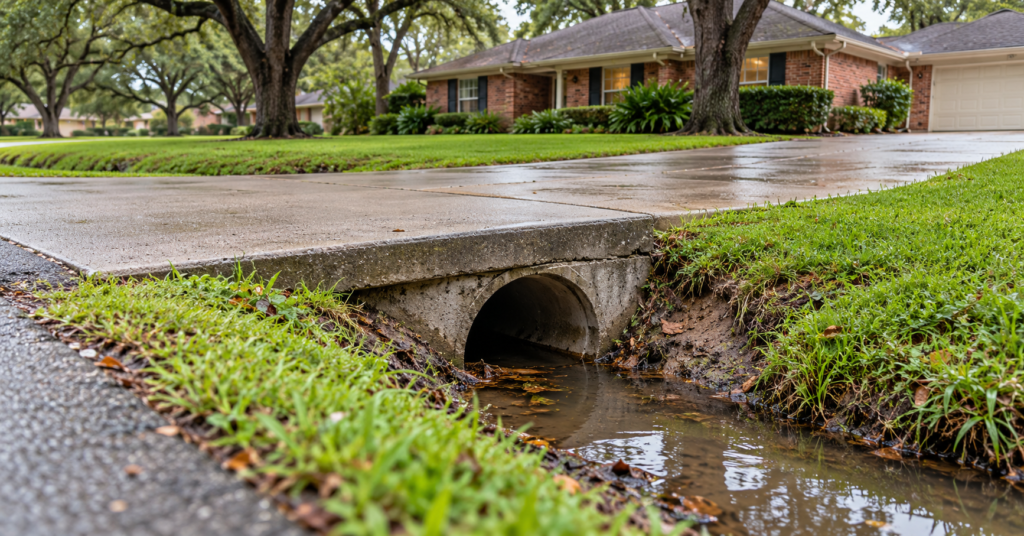
On a street with open drainage, a driveway culvert carries stormwater beneath the driveway approach so the roadside ditch can continue past the entrance. It is different from the sanitary sewer pipe serving the house.
The visible pipe ends reveal only part of the installation. Its condition beneath the pavement and its relationship to neighboring drainage also matter. A blockage, damaged section, or unsuitable elevation may require a different response from a problem farther downstream.
Start by identifying which pipe is involved. A quote describing only “drain repair” leaves too much uncertainty about the system and the work being proposed.
Separate Homeowner Duties From City Maintenance
Houston Public Works explains the division of responsibility in its stormwater maintenance guidance:
- Abutting property owners must keep roadside ditches clear of vegetation, rubbish, and other debris that obstructs flow.
- The city handles work such as removing accumulated sediment, regrading ditches, and flushing culverts.
- Property owners are responsible for replacing damaged or undersized culverts beneath their driveways, as well as providing new driveway culverts.
The city also says driveway and culvert repairs require coordination through its permitting system.
There is a useful qualification: Houston’s ditch information page lists culvert repair among its ditch re-establishment activities. Ask what a particular city project includes at your address before commissioning overlapping work. A planned ditch visit does not, by itself, confirm that the city will replace your driveway pipe.
Request a clear explanation of the proposed work and any portion that remains your responsibility.
Confirm Which Authority Covers the Property
A Houston postal address is not enough to establish who maintains the street. Before relying on city guidance, verify the property’s jurisdiction and the authority responsible for the roadway.
Have the street address, nearest intersection, and photographs ready when asking where to direct the inquiry. If the road is outside the city’s responsibility, obtain the applicable county, state, or private-road requirements.
Also locate your property survey and any previous driveway permits. These can help distinguish the driveway approach in the public right-of-way from paving farther inside the lot. That distinction matters when describing the proposed work to the permitting office.
Document the Problem Before Choosing a Repair
Observe the entrance from a safe location during dry weather and after ordinary rainfall. Photographs taken from the same positions can show whether conditions are changing.
Useful observations include:
- Debris or sediment obscuring a pipe opening.
- A visibly cracked, displaced, or distorted pipe end.
- Soil washing away beside the entrance.
- New depressions or pavement movement above the pipe.
- Water collecting on one side of the driveway.
- Similar ponding extending along several neighboring properties.
These are reasons to request an assessment, rather than proof of a particular defect. Ask the person evaluating the problem to explain how the proposed work addresses the observed cause.
Avoid entering a culvert, reaching into concealed openings, or inspecting from floodwater. If the approach appears undermined or unstable, arrange an assessment before continuing to drive over it.
Know When Standing Water Merits a Report
Houston’s roadside ditch information explains that temporary standing water can occur after rainfall. Differences in culvert heights and uneven ditch flow lines can contribute to ponding, and standing water alone does not necessarily qualify a ditch for re-establishment.
The city asks residents to call 311 when a roadside ditch retains water for more than 48 hours after a rain event.
For a useful report, record when the rain stopped, where water remains, and whether the issue affects one entrance or a longer stretch of street. Include photographs and describe any recent driveway or drainage work.
Keep the service-request number and the city’s assessment. The 48-hour guidance concerns lingering ponding; an immediate threat to people or property should be reported promptly through the appropriate emergency channel.
Check Permits Before Replacing or Widening the Driveway
A driveway project can affect the drainage installation beneath it. Tell the Houston Permitting Center whether the proposal involves replacing pavement, changing the approach width, extending the culvert, or altering elevations.
Houston’s residential permit guidance includes new driveway construction, replacement, and extensions. Its 2026 residential project guide also identifies site-plan requirements for driveway replacement and notes that additional requirements depend on the work’s scope.
Ask which plans, reviews, and inspections apply before work begins. Make sure the application describes the drainage work as well as the pavement.
Do not select a replacement pipe solely by copying the existing installation. Houston’s open-ditch driveway review checklist considers pipe dimensions, material, neighboring culverts, spacing, and end structures. Have the proposed design checked against the requirements for the actual site.
Compare the Full Scope of Replacement Quotes
Two culvert estimates may cover very different amounts of work. One might include only the pipe, while another includes demolition, excavation, pavement reconstruction, and restoration.
Ask each contractor to identify:
- How the existing problem was assessed.
- What pipe and associated structures will be installed.
- How much driveway must be removed and rebuilt.
- Whether permit, design, and inspection costs are included.
- How excavated material and the old pipe will be removed.
- What landscaping or ditch restoration is included.
- How vehicle access will be handled during construction.
Assign responsibility for utility locating before excavation. The Railroad Commission of Texas recommends contacting 811 before any digging project, regardless of depth. Allow time for the required locating process before scheduling excavation.
A written scope makes price comparisons more meaningful and helps prevent disagreements about unfinished restoration.
Keep Records and Check the Completed Entrance
Collect the approved plans, permit information, required inspection results, invoices, and installation photographs. Ask the contractor to document the pipe before it is covered, where that can be done safely.
After completion, observe the area following ordinary rainfall. Note new erosion, settlement, blocked openings, or drainage changes and raise them with the contractor or responsible authority. A dry-weather photograph cannot show how the finished installation performs during rain.
Add the accessible pipe openings and adjacent ditch to your annual home maintenance checklist. Periodic observations and dated records give you a useful reference if a later drainage problem develops.
Note: This article provides general information for homeowners within the City of Houston. Roadway authority, permit requirements, and project responsibilities vary by location and scope. Confirm the requirements for your address with Houston Public Works and obtain qualified advice for drainage design or structural concerns.