Dallas homeowners often consider air sealing when rooms feel drafty, temperatures vary, or heating and cooling seem harder to control. Work around attic openings, doors, windows, and other leakage paths can improve comfort, but the plan also needs to account for fuel-burning equipment.
A furnace, water heater, or fireplace may depend on airflow that changes during the project. The important question is whether those appliances can continue operating and venting safely once the work is finished.
Dallas home air sealing should therefore begin with an assessment of the house, its equipment, and the proposed changes.
Understand How Backdrafting Develops
Some fuel-burning appliances use natural draft to carry exhaust through a vent or chimney. When pressure conditions interfere with that flow, combustion gases can enter the home.
The Department of Energy describes backdrafting as combustion products, including carbon monoxide, being drawn indoors by negative pressure.
Air sealing changes the routes through which replacement air enters. Exhaust fans, clothes dryers, and other equipment also move air, so their interaction with combustion appliances deserves professional evaluation.
This does not mean every sealing project creates a problem. ENERGY STAR explains that backdrafting can occur in some homes and recommends checking fuel-burning appliances before and after sealing work.
Include equipment that operates outside the heating season. A gas water heater still needs appropriate combustion air and venting when the furnace is off.
Identify How Each Appliance Gets Its Air
Give the assessor a list of fuel-burning equipment and its location. Include appliances in garages, attics, closets, and other spaces affected by the project.
Ask the professional to identify the venting arrangement rather than relying on the appliance’s age or appearance.
| Equipment arrangement | Question for the assessor |
|---|---|
| Natural-draft appliance | Where does its combustion air come from, and how will sealing affect that supply? |
| Power-vented appliance | Does it still draw combustion air from the surrounding space? |
| Sealed-combustion, direct-vent appliance | Are its dedicated outdoor intake and exhaust paths correctly installed and unobstructed? |
EPA guidance distinguishes equipment that uses indoor air from sealed-combustion equipment supplied directly from outdoors. A fan-assisted exhaust does not, by itself, mean the appliance has a sealed outdoor air supply.
Also tell the assessor about planned equipment changes. Replacing a range hood, enclosing an equipment closet, or changing an attic’s ventilation arrangement should be considered with the sealing work.
Include Safety Testing in the Written Scope
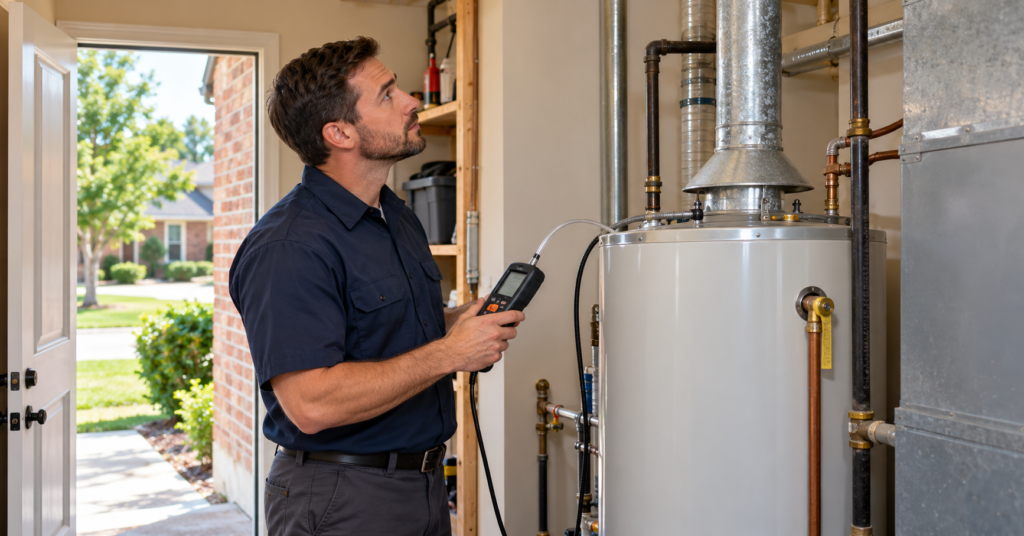
Before accepting a proposal, ask who will evaluate combustion safety and what the assessment includes. A quote that lists caulk, foam, and insulation may leave diagnostic work unspecified.
Useful questions include:
- Which appliances will be tested?
- Will the assessment check draft, exhaust spillage, and carbon monoxide?
- How will relevant exhaust equipment and pressure conditions be evaluated?
- Who will address any problems found before work begins?
- Will you receive written findings?
Keep air-leakage testing and combustion testing distinct. ENERGY STAR’s diagnostic-test definitions explain that a blower-door test measures airtightness and identifies leakage paths, while combustion-safety testing evaluates fuel-burning equipment and exhaust removal.
A lower leakage measurement alone does not establish that appliances vent safely. Have qualified professionals select and perform the appropriate tests.
Preserve Openings That Have a Specific Purpose
A grille, duct, or opening near an appliance may provide necessary combustion air. It should not be sealed simply because someone feels a draft there.
The Department of Energy’s combustion appliance zone guidance explains the importance of adequate air supply and evaluating changes to spaces containing applicable fuel-burning equipment.
Ask the project lead to identify openings that must remain functional and explain those restrictions to everyone doing the work. Include ventilation intakes, appliance exhausts, and any required combustion-air openings.
Work around hot flues and chimneys also needs suitable materials and required clearances. Have the contractor specify the applicable installation detail instead of filling every visible gap with ordinary foam.
If the proposal includes converting a vented attic into an enclosed space, request an equipment and ventilation review before the enclosure is changed.
Confirm Dallas Permit Requirements When the Scope Expands
Air sealing sometimes becomes part of a larger job involving a furnace, water heater, ducts, or ventilation equipment.
The City of Dallas Planning and Development guide identifies mechanical permits for installing, replacing, or modifying HVAC systems and plumbing permits for work involving items such as water heaters.
Ask the city or the responsible licensed contractor which permits and inspections apply to your exact scope. Confirm who will obtain them and provide the completed inspection records.
Do not assume every weatherstripping task has the same requirements as equipment replacement. Likewise, calling a project “insulation work” does not settle the requirements for associated mechanical or plumbing changes.
These Dallas procedures apply within the city’s jurisdiction. If the property is in another Dallas-area municipality, check with that local permitting authority.
Plan Ventilation Alongside Energy Improvements
Reducing uncontrolled leakage can change how the house receives outdoor air. General household ventilation and an appliance’s combustion-air supply serve different purposes; both need appropriate consideration.
EPA notes that most conventional heating and cooling systems do not automatically bring fresh outdoor air into a home. Whether additional mechanical ventilation is appropriate depends on the house, existing equipment, and planned improvements.
Ask how the completed project will provide needed outdoor air, remove indoor pollutants, and manage moisture. Any proposed ventilation equipment should be considered alongside exhaust fans and combustion appliances.
Property Tale’s guide to home improvements that can increase property value discusses coordinating insulation, air sealing, and ventilation. Use that broader planning approach when deciding the order of upgrades, without assuming a guaranteed resale return.
Define What Completion Must Include
Agree on the final verification before work begins. Schedule the relevant post-work combustion checks after sealing and related equipment changes are complete.
Request a record identifying:
- Appliances evaluated and test results.
- Problems corrected during the project.
- Remaining recommendations or limitations.
- Ventilation settings and operating instructions.
- Applicable permit and inspection information.
This record should explain the condition of the completed installation. A receipt showing that insulation was added does not document appliance performance.
Keep the report with the home’s maintenance records. If you later change an exhaust fan, appliance, duct system, or enclosure, tell the next professional about the earlier work so they can assess whether further testing is needed.
Maintain Carbon Monoxide Alarms and Respond Promptly
Carbon monoxide alarms provide an important layer of protection. They do not replace proper appliance installation, maintenance, or combustion-safety assessment.
The Consumer Product Safety Commission recommends CO alarms on every level of the home and outside sleeping areas. Follow manufacturer instructions for placement, testing, power supply, and replacement.
If a CO alarm sounds, move everyone outside to fresh air immediately and call 911 from outside. Do not stay inside to locate the source or reenter until emergency responders permit it. Equipment identified as the cause should remain out of operation until properly serviced.
Note: This article provides general information, not a combustion-testing procedure or a determination of code compliance. Equipment, installation conditions, and permit requirements vary. Use qualified professionals and confirm property-specific requirements with the responsible local authority.