California attic bats can turn a routine roof repair into a project that needs careful scheduling. A gap behind a fascia board or beside a vent may be an active entrance, so closing it immediately can leave animals trapped inside the building.
Before applying sealant, replacing a screen or removing damaged trim, establish whether bats are using the space and whether they can leave safely. The work should address the animals, the condition of the building and any contamination as separate parts of the same repair plan.
Address a Bat in a Living Space Promptly
A bat found in a bedroom calls for a different response from bats observed entering an attic from outside.
The California Department of Public Health’s bat-exposure guidance advises people who find a bat indoors, particularly where someone was sleeping, to discuss the situation with a healthcare provider even when no bite is apparent. Bat bites can be difficult to notice.
Seek medical and local public-health advice promptly after possible contact. If a bite or scratch occurred, wash the area with soap and water and obtain medical care immediately. Keep children and pets away, avoid handling the animal and contact animal control.
Do not release a bat found indoors before receiving public-health guidance; it may need to be collected for testing. If a pet had contact, also call a veterinarian. Arranging attic repairs should not delay an exposure assessment.
Confirm the Roost Without Disturbing It
Noise behind a wall does not establish which animal is present. Rodents, birds and bats can use different parts of the same roof structure, and the appropriate response depends on identifying the occupant.
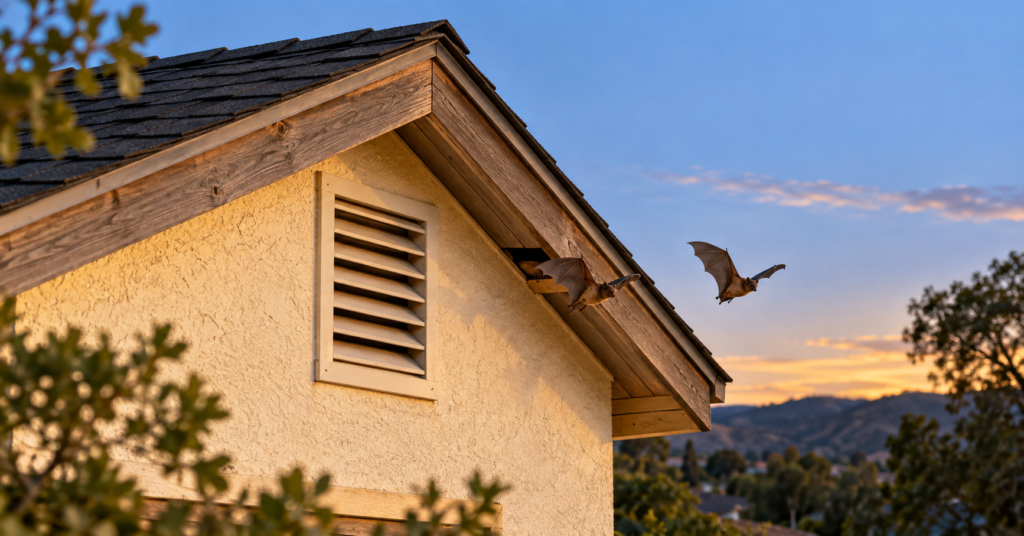
Possible clues include bats repeatedly emerging from one roofline opening at dusk, staining around a narrow gap and droppings beneath a suspected entrance. Leave droppings undisturbed rather than handling or crushing them to identify the animal.
From a safe ground-level position, note where activity occurs and when. Photographs of the opening and a short observation log can help the person assessing the property. Avoid climbing into an occupied roost or removing boards to obtain a closer look.
The California Department of Fish and Wildlife’s bat-colony guidance identifies attics, siding and roofs as potential roost locations and advises against disturbing roosting bats. Its colony-reporting form supports wildlife monitoring; it does not replace animal control or an inspection of the building.
Assess California Attic Bats Before Setting a Repair Date
The presence of young bats can determine when exclusion is appropriate. Young that cannot fly may remain in the roost while adults leave to feed.
The CDC’s guidance on keeping bats out of homes cautions against trapping young during work between May and August and notes that local wildlife rules must be considered.
Those months are a warning period, not a statewide guarantee that every other date is suitable. Have a qualified bat specialist assess occupancy, the presence of dependent young and the appropriate work window. If species protections or other restrictions are unclear, obtain guidance from CDFW before proceeding.
A quiet evening or a change in season should not be treated as proof that the attic is empty. Set the repair date after the assessment.
Coordinate Exclusion With the Roofing Work
Ask for a written plan explaining how bats will leave, how their return will be prevented and how the specialist will confirm that final closure can proceed. Humane exclusion commonly uses controlled one-way exits when conditions are suitable.
The important handoff is between the person managing the bats and the person repairing the roof. A roofer should know which openings must remain available during exclusion and who will authorize permanent closure.
Tell everyone working on the house about the plan, including painters, insulation installers and anyone replacing exterior trim. An unrelated task could otherwise close an opening before the exclusion stage is complete.
If a leak requires urgent attention, have the roofer and wildlife specialist agree on temporary protection that does not trap animals. Do not assume the entire roof must remain unrepaired, or that a temporary covering is harmless.
Specify a stop-work response if bats appear during board removal. Workers should pause the affected task and contact the designated specialist rather than improvising.
Plan Droppings Cleanup Before Replacing Insulation
Removing bats and deciding what to do with accumulated droppings are different jobs. Ask for an assessment of the affected area before agreeing to extensive insulation removal or replacement.
The CDC’s histoplasmosis prevention guidance explains that disturbing material containing bird or bat droppings can increase exposure to a fungus that causes lung infection. It recommends specialist cleanup for large accumulations. Finding droppings does not establish that the fungus is present, but unnecessary dust generation should be avoided.
Do not dry-sweep the material, use a leaf blower or begin vacuuming it with ordinary household equipment. NIOSH guidance on controlling contaminated dust recommends assessing the extent of contamination and controlling dust when removal is necessary.
Ask the cleanup team to explain how it will isolate the work area, handle affected insulation and remove waste without spreading debris through living spaces. Request photographs identifying which materials need replacement.
Odor treatment alone does not demonstrate that contamination has been addressed. Equally, an isolated finding should not automatically become a recommendation to replace every piece of attic insulation.
Repair Entry Points Without Blocking Attic Ventilation
A damaged vent may need a properly fitted replacement, not a solid cover. Bat prevention should preserve the ventilation required for the roof assembly.
This matters in California because vents also form part of a home’s wildfire protection. CAL FIRE’s home-hardening guidance identifies attic vents as possible entry points for embers and warns that covering or replacing vents can reduce airflow. It recommends consulting the local building official about ventilation requirements.
Ask the contractor to specify the replacement vent or screening arrangement, its attachment method and how required airflow will be maintained. Where wildfire construction requirements apply, confirm that the proposed work is compatible with them.
The repair should also address why the opening developed. Loose trim, deteriorated wood or a poorly fitted vent frame may need correction before the gap can be closed durably.
Do not add improvised screening across a flue or appliance exhaust. Those openings require appropriate assemblies and a contractor familiar with their function.
Agree on the Scope and Follow-Up Before Work Starts
For California attic bats, compare proposals by what the work includes. A quote for sealing one visible gap may cover a much smaller job than an assessment, exclusion, cleanup and roof repair.
Ask each proposal to identify:
- The inspection findings and areas that could not be assessed.
- The planned exclusion window and conditions for delaying work.
- The person responsible for confirming final closure can proceed.
- The repairs and cleanup included, with any exclusions clearly stated.
- The follow-up visit and response if activity continues.
Keep the inspection photographs, repair records and warranty terms together. They provide a useful reference if future roof work affects the same location.
After completion, observe the repaired area from outside and report renewed entry, fresh deposits or indoor activity. Bats flying elsewhere in the neighborhood are not, by themselves, evidence that the repair failed. The relevant question is whether they are still accessing the house.
Note: Exclusion timing, wildlife protections and building requirements depend on the species, location and condition of the property. Confirm the work plan with the appropriate specialists and authorities; seek prompt medical advice for possible bat exposure.