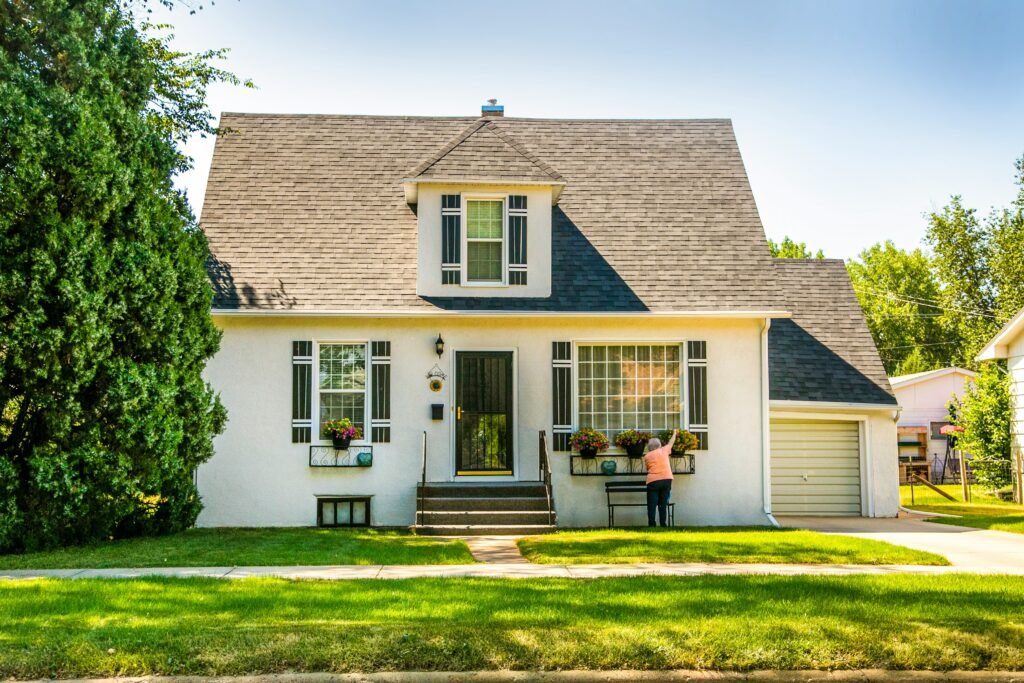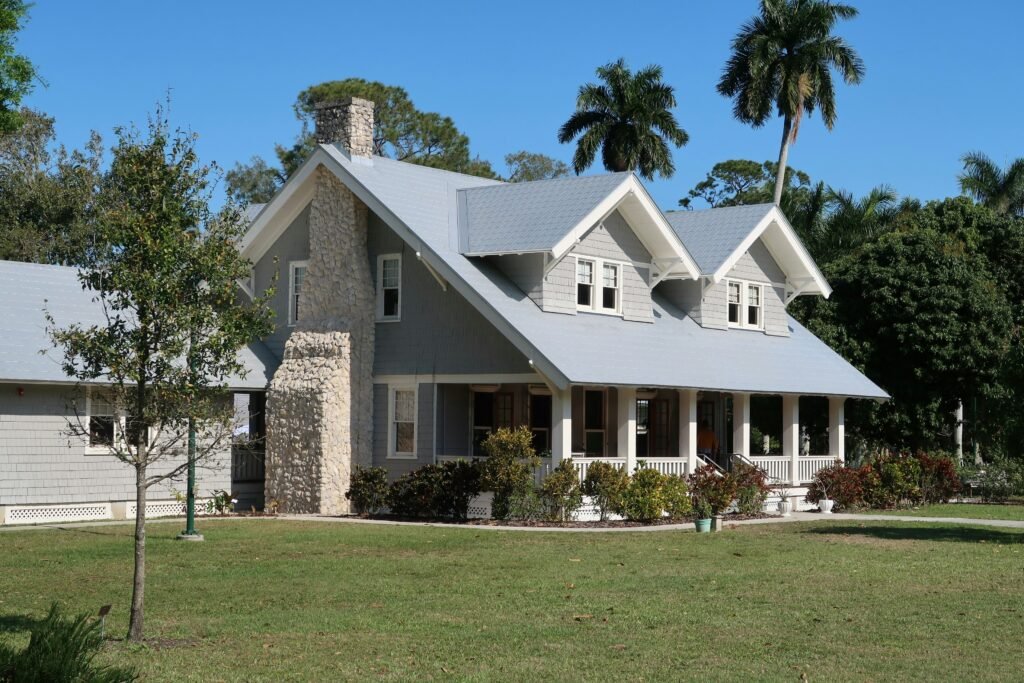
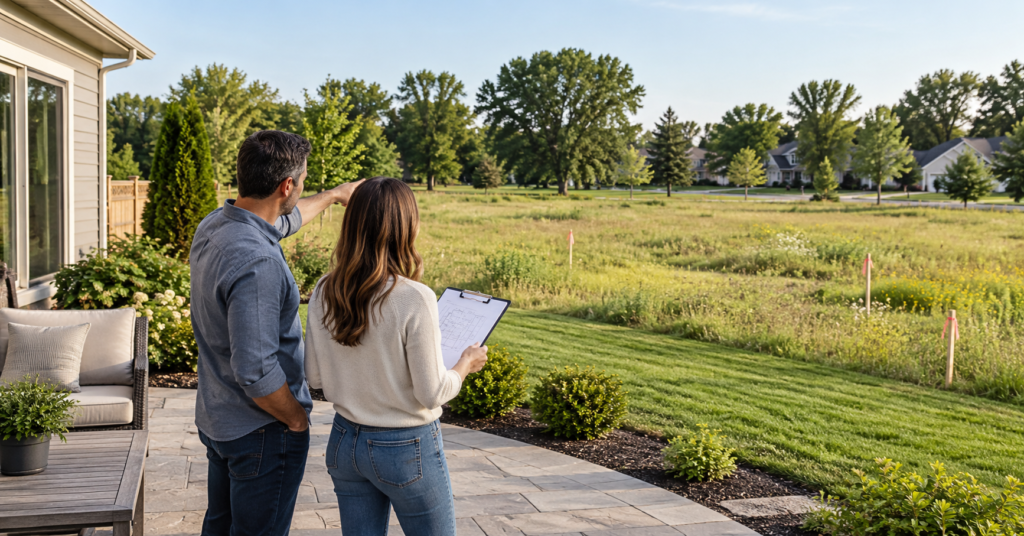
An empty lot beside a home can make the property feel quieter, brighter, and more private. Trees may screen the backyard, an open field may provide a view, or an undeveloped corner may keep traffic away from the driveway.
Those benefits describe the surroundings today. Before buying near vacant land, investigate what the neighboring property could become and which documents support any promises about its future.
The goal is to understand whether the home would still suit you if the land changed in a way the applicable rules allow.
Identify the Exact Parcel Beside the Home
Start by locating the neighboring land in the local assessor’s or land-records system. Record its parcel number, listed owner, approximate area, and any separate street address.
What looks like one open field may contain several parcels. A narrow strip beside the backyard could also belong to a different owner from the larger site beyond it. Search each relevant parcel rather than relying solely on the home’s address.
Use online mapping to orient your research, then obtain appropriate records for questions about legal boundaries. For example, Maryland’s official tax-map dataset specifically warns that its maps are not surveys or legal descriptions.
If a driveway, fence, or proposed building appears close to the boundary, ask a qualified surveyor or title professional what documentation is needed. Do not treat an aerial-image overlay as a precise measurement.
Separate Current Zoning From Long-Term Planning
Ask the responsible planning department to confirm the parcel’s zoning, relevant overlays, and applicable land-use plan.
These records answer different questions. Zoning addresses allowable uses and development requirements. A broader plan describes the jurisdiction’s intended pattern of growth. LA County’s land-use and zoning explanation illustrates this distinction, although the controlling documents and procedures depend on the property’s location.
Move beyond a broad label such as “residential.” Ask about:
- Permitted housing types and density.
- Building height and required setbacks.
- Uses requiring additional approval.
- Special environmental or design restrictions.
- Pending zoning or plan amendments affecting the site.
A map designation also needs context. Ask which rules currently govern the parcel and whether any approved exceptions or development agreements apply. Keep the planner’s response, the map date, and links to the relevant documents together.
Check the Status Behind Every Development Claim
A neighbor’s recollection, a developer’s illustration, and an issued permit provide different levels of information. Find the official project record before deciding how much weight to give a claim.
Search by parcel number, address, and any project or applicant name you have been given. Look for related applications, revised plans, decisions, and permit conditions.
Seattle’s project research guidance, for example, explains how its records can show project descriptions, permit status, related permits, and supporting documents. Ask the local authority where equivalent information is available for your property.
| Information found | Question to resolve |
|---|---|
| Concept drawing or marketing announcement | Has an application actually been submitted? |
| Application under review | What remains undecided, and which plans are current? |
| Planning approval | What conditions and further permits are required? |
| Issued construction permit | What work does it authorize, and is it still valid? |
| No active application found | Were the correct parcels and relevant record systems searched? |
Avoid translating an approved proposal into a guaranteed construction date. Ask about outstanding approvals, permit expiration, and project changes. Likewise, an empty search result describes what you found; it does not establish that the land will remain undeveloped.
Verify Claims About Protected Land and Access
Descriptions such as “greenbelt,” “open space,” or “protected land” need documentary support. Ask what creates the protection, which part of the parcel it covers, and who can explain or enforce its terms.
A conservation restriction may preserve particular uses while allowing others. The USDA’s Agricultural Conservation Easement Program, for instance, protects working agricultural land by limiting certain nonagricultural uses. Protection does not necessarily mean the land will have no ongoing activity.
Have a qualified professional review any recorded restriction you intend to rely on. Ask whether buildings, maintenance work, agricultural operations, or other activities remain permissible under that specific document.
Check access separately. If residents use the vacant lot as a shortcut, parking area, or informal extension of their yards, ask what authorizes that use. Longstanding convenience should not substitute for reviewing relevant ownership and access documents.
Also ask whether easements affecting the home could serve the neighboring parcel.
Translate Possible Development Into Everyday Effects
Once you have reliable information, assess how a plausible project would interact with the home itself.
During a second visit, compare available plans with the locations of bedroom windows, outdoor seating, the driveway, and the rooms you would use for work. Property Tale’s guide to what to look for during a house viewing provides a useful framework for examining surroundings alongside the building.
Focus on practical questions:
- Could a building face the backyard or main living-room windows?
- Where might vehicles enter, park, or make deliveries?
- Would proposed lighting affect bedrooms or outdoor spaces?
- Could road work change driveway access?
- Are grading or drainage plans relevant to the shared boundary?
Distinguish construction disruption from the completed project’s operation. Temporary excavation noise and permanent vehicle movements require different judgments.
If drawings are difficult to interpret, request help from the appropriate planner, engineer, or other qualified professional. Avoid estimating building separation or drainage behavior from an attractive rendering alone.
Discuss the Surrounding Land Before Making an Offer
Before making an offer, discuss the neighboring parcel with a local real estate agent and identify which questions need confirmation from the local planning department.
Bring the parcel numbers, current project records, and your specific concerns. This gives the discussion a concrete basis and helps distinguish documented information from neighborhood speculation.
Ask how comparable homes with different surroundings compete in the local market. A home beside established buildings may offer a useful comparison with one whose appeal depends heavily on an open view.
Keep professional roles clear. An agent can help evaluate the purchase and coordinate questions; planning officials explain local development processes, while surveyors, engineers, and attorneys address issues within their expertise. Request documentary support for any assurance that materially affects your decision.
Decide What Must Be Resolved Before Committing
Create a short list separating confirmed facts, pending decisions, and questions that remain unanswered. Identify which uncertainties affect your willingness to buy.
For example, confirmation of the neighboring parcel’s permitted uses may be enough for one buyer. Another may need clarification of a proposed driveway location because it would directly affect access to the home.
Discuss the timing of further investigation and any appropriate contract protections with your agent or attorney. Do not assume every unresolved question can be addressed after an offer becomes binding.
Evaluate the house under a realistic alternative scenario: would its layout, location, price, and outdoor space still work for you if the neighboring land were developed? Base your decision on the property you are purchasing and the evidence available about its surroundings.
Note: This article provides general educational information, not legal, planning, surveying, engineering, or financial advice. Land-use rules, recorded rights, approval procedures, and purchase contracts vary by location. Confirm property-specific information with the responsible authorities and qualified professionals.