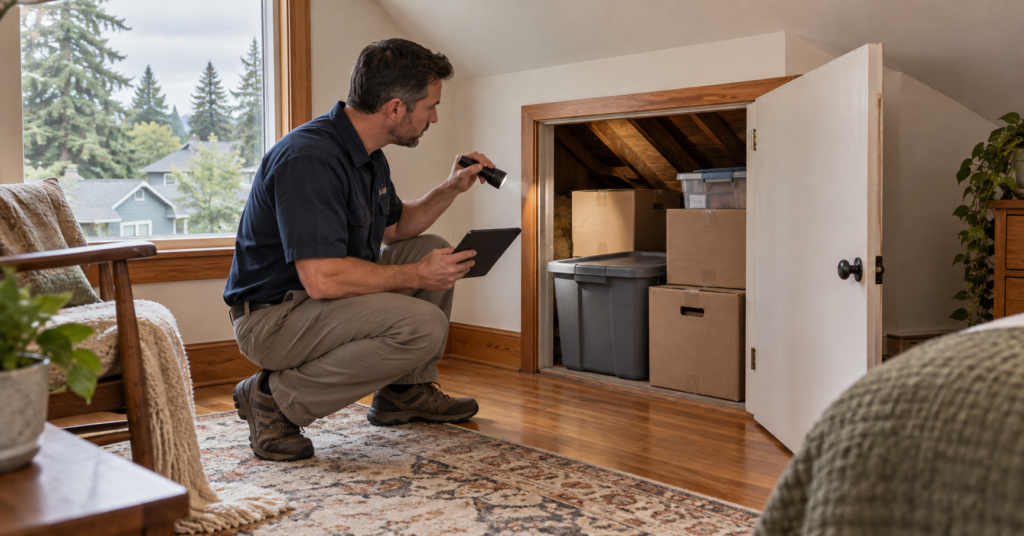
An inspection report can contain dozens of photographs and still leave important parts of a home unevaluated. A crawl space entrance may be blocked by storage, an attic hatch may be inaccessible, or a disconnected utility may prevent equipment from being tested.
For buyers arranging Seattle home inspections, the concern is what remains unknown after the appointment. An unchecked area does not prove that a defect exists, but it also provides no basis for assuming everything is sound.
The useful next step is to identify the limitation, establish what would allow further evaluation, and decide whether that work can happen within the purchase timeline.
Read the limitations alongside the repair findings
Start with the report’s exclusions and access notes. These may appear within individual system descriptions rather than in the summary of major defects.
Under Washington’s home inspection exclusions, inspectors are not required to determine the condition of components that are not readily accessible. When a system or component designated for inspection is excluded, the report must state the reason.
Ask the inspector to clarify vague descriptions. “Limited attic access” could mean the entrance was blocked, only part of the attic could be reached, or conditions prevented safe entry. Each situation requires a different response.
Create a short record of the affected location, the reason given, and the unanswered question. This helps you request specific follow-up work instead of asking whether the house “passed.”
Identify what would actually remove the barrier
Some access problems can be resolved through ordinary preparation. Others require a qualified professional or a different investigation.
| Limitation reported | Practical next step |
|---|---|
| Boxes obstruct an attic entrance | Ask the seller to clear the approach and confirm the inspector’s access requirements |
| Crawl space conditions appear unsafe | Ask what hazard must be assessed or addressed before another visit |
| Water service is off | Arrange authorized, safe restoration and agree which plumbing checks need repeating |
| A component sits behind a finished wall | Discuss whether further investigation is justified and what owner permission it would require |
Understanding what a home inspection covers in Seattle helps distinguish an access problem from a service that was never included in the appointment.
For example, clearing a path to plumbing does not automatically add a sewer camera inspection to the original agreement. Confirm the scope before assuming a return visit will answer every remaining question.
Arrange access through the seller before booking again
Give your agent a precise preparation request to communicate to the seller. Identify the entrance, room, equipment, or storage area involved. Include the inspector’s explanation of what needs to be available.
Ask who will complete the preparation and when it will be finished. For an occupied property, coordinate entry with the people living there. A second appointment is more useful when the necessary arrangements have already been confirmed.
Do not cut an opening, dismantle finishes, or move the seller’s belongings without permission. If an opening needs alteration or a hazardous condition needs correction, establish who is authorized and qualified to do that work.
For disconnected utilities, ask why service was turned off. Washington’s plumbing standards exclude inspection of systems that are shut down or winterized. Restoration should be coordinated safely with the appropriate owner, utility, or trade professional before testing is scheduled.
Ask how the area was examined, not just whether it was entered
An inspector may obtain useful information without physically entering every location. The important questions are what method was used, what could be observed, and what remained outside view.
Roof inspections illustrate this distinction. Washington’s roof inspection standards permit alternative inspection methods. If the inspector does not walk the roof, the method used must be reported.
Ask which roof surfaces and details were visible and whether the report recommends a roofing specialist. The absence of roof walking alone does not establish that the inspection was inadequate.
For attics and crawl spaces, Washington’s structural standards require entry and traversal where readily and safely accessible, while recognizing clearance, obstruction, and safety limitations. Discuss any remaining blind spots with the inspector rather than pressing for unsafe entry.
Give moisture clues a specific follow-up question
A blocked area deserves particular attention when nearby observations suggest a possible moisture problem.
Suppose the inspector records staining below an inaccessible attic. Ask whether the location could be evaluated after access is restored and whether a roofer or another specialist should investigate. The stain alone cannot establish its source, age, or current activity.
Property Tale’s guide to signs of hidden water damage explains clues such as swollen materials, musty odors, and localized repairs. Use those observations to frame questions about the inaccessible area.
Request available records of previous leaks and repairs. A receipt may explain what work was performed, but ask whether the newly accessible area still needs examination. Cosmetic condition and repair history provide different pieces of information.
Define the return visit and its written outcome
Before scheduling another appointment, agree on the work to be performed. A focused return visit should identify the previously excluded areas and the questions the inspector will attempt to answer.
Confirm:
- Which locations or systems will be examined.
- What preparation must be completed beforehand.
- Whether a specialist should attend separately.
- What the additional visit will cost.
- When written findings will be available.
Ask for an addendum or other written report identifying the visit date, observations, photographs, and any limitations that remain. Keep it with the original inspection report.
If new findings require repair estimates, allow time for those estimates to address the actual defect. A verbal assurance that the area “looks better” provides little help when deciding what work or expense to accept.
Keep the inspection appointment separate from the contract deadline
The date an inspector can return and the deadline for your contractual response are separate issues.
The Consumer Financial Protection Bureau’s inspection guidance recommends scheduling early enough to resolve problems and complete additional inspections. It also explains that options for negotiating repairs or canceling depend on the purchase agreement.
Ask your agent or real estate attorney to identify the applicable response deadline and required notice procedure. If more time is needed, have them address any extension through the proper agreement process. Do not assume a seller’s promise to clear an entrance changes the existing dates.
When access remains unresolved, distinguish the options available under your contract from the level of uncertainty you are personally willing to accept. A proposed seller credit may help with costs, but its adequacy is difficult to judge when the condition and extent of a possible repair remain unknown.
Note: This article provides general educational information, not legal, engineering, or inspection advice. Inspection scope, access conditions, and contractual rights vary. Consult a Washington-licensed home inspector and qualified local professionals about the property and purchase agreement.