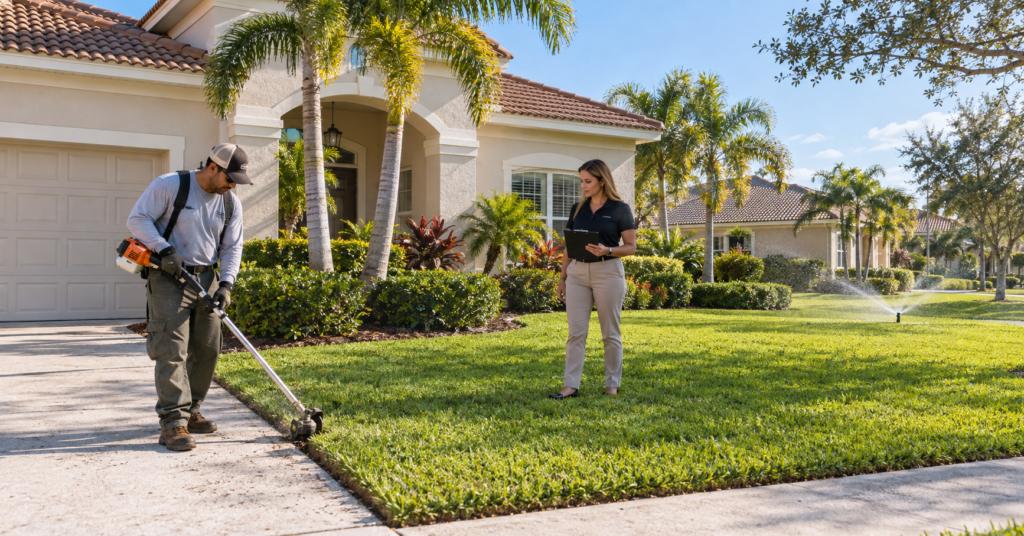
Orlando rental lawn care can become a source of HOA fines and landlord-tenant disagreements when the lease does not clearly identify who must mow, irrigate and respond to landscaping problems. A tenant may believe that basic mowing is enough, while the owner expects weed control, edging, fertilization and compliance with detailed community standards.
The financial risk becomes greater when an HOA sends notices to an owner who lives outside Florida. By the time the tenant or property manager learns about the violation, the correction period may already be running.
A better system defines each responsibility, monitors the property and creates a direct process for handling notices before fines accumulate.
Why Lawn Care Is a Rental Property Issue in Orlando
Central Florida’s climate allows grass and weeds to grow quickly during warm, wet periods. The same yard may then experience dry patches, irrigation restrictions or pest damage during other parts of the year.
That creates several maintenance variables for a rental property:
- Grass may need more frequent mowing during the growing season.
- Irrigation equipment can fail without an obvious interior warning.
- Heavy rain can produce rapid weed growth and standing water.
- Tropical weather can leave branches and debris across the property.
- An HOA may regulate grass height, edging and visible dead areas.
- Tenants may not know which landscaping changes require approval.
The central question is not simply whether someone will cut the grass. It is whether the owner has a reliable system for maintaining the exterior condition required by the lease, local rules and HOA documents.
What Florida Law Says About Maintenance Duties
Florida law requires residential landlords to comply with applicable building, housing and health codes. It also establishes other maintenance duties depending on the type of rental property.
However, routine lawn mowing is not specifically assigned to every landlord or tenant by the general maintenance provisions. The rental agreement therefore plays an important role in establishing who handles ordinary yard work.
The current wording of the landlord’s maintenance obligations can be reviewed in Florida Statutes Section 83.51.
A lease provision cannot be evaluated in isolation. Property type, local codes, safety conditions and the cause of the damage may affect responsibility. Owners should have Florida counsel review lease language when a maintenance obligation could create a legal dispute.
Define Orlando Rental Lawn Care Precisely
A clause stating that the “tenant is responsible for the lawn” leaves too much open to interpretation. It does not explain which tasks are required, how often they must be completed or what happens when the sprinkler system fails.
A more useful lease or lawn-care addendum should address:
- Mowing and acceptable grass height
- Edging along driveways, sidewalks and curbs
- Weed removal from beds and paved areas
- Shrub and hedge trimming
- Leaf and storm-debris removal
- Fertilizer and pest treatments
- Irrigation scheduling
- Sprinkler-head damage
- Dead grass or plant replacement
- Tree trimming and hazardous limbs
- HOA violation response
- Landscaping changes and approval requirements
Not every task should be given to the same party. The owner might arrange professional mowing while requiring the tenant to report broken sprinklers and prevent vehicles from being parked on the grass.
Separating routine work from repairs makes the agreement easier to follow.
Decide Who Should Control the Lawn Service
Orlando landlords generally have three practical options: tenant-controlled care, owner-provided service or a shared arrangement.
Tenant-controlled lawn care
The tenant arranges and pays for routine maintenance. This may reduce the owner’s monthly operating expenses, but it also gives the owner less control over service quality.
This arrangement is more suitable when the property has a simple yard, no demanding HOA standards and a tenant who understands the required work. The lease should still allow lawful inspections and explain what happens if maintenance is neglected.
Owner-provided lawn care
The owner hires a landscaping company and includes the expense in the rental pricing. Orlando-area providers such as Ruppert Landscape offer professional landscape services that can help property owners maintain more consistent exterior standards. This approach gives the landlord greater control over service frequency, maintenance documentation and vendor performance.
It can be particularly useful when the owner lives outside Orlando, the home belongs to an HOA or the landscaping contributes materially to the property’s value.
The lease should explain that scheduled exterior service is included while clarifying that the tenant remains responsible for preventing damage and reporting problems.
Shared responsibility
A shared system assigns specialized work to the owner and daily care to the tenant. For example, the owner may cover mowing, fertilization and irrigation repairs while the tenant removes personal items before service and promptly reports leaks.
This can work well, but only when the division is written clearly. Vague shared responsibility can leave each party expecting the other to act.
Why the Owner Remains Exposed to HOA Enforcement
Transferring yard work to a tenant does not necessarily transfer the owner’s relationship with the homeowners’ association.
Florida Statutes Section 720.305 states that association members and their tenants, guests and invitees must comply with the governing documents and reasonable association rules. It also permits associations to levy reasonable fines for certain violations, subject to statutory procedures and the community documents.
Under the statute, fines may generally reach $100 per violation and may continue for each day of an ongoing violation, with an aggregate limit of $1,000 unless the governing documents provide otherwise. The law also includes notice, hearing and cure provisions. Owners should review the current requirements in Florida Statutes Section 720.305.
Even when a violation was caused by a tenant’s failure to maintain the lawn, the association will usually communicate through the parcel owner’s contact information. The owner may have to correct the condition first and then determine whether the lease allows recovery of an expense from the tenant.
Review the HOA Landscaping Rules Before Advertising
The owner should obtain the current declaration, rules, architectural guidelines and enforcement procedures before deciding how lawn care will be handled.
Look for standards covering:
- Maximum grass height
- Approved grass varieties
- Bare or discolored areas
- Weed control
- Hedge height
- Tree placement
- Mulch color or type
- Landscape borders
- Visible irrigation equipment
- Artificial turf
- Yard decorations
- Trash containers
- Vehicles parked on landscaped areas
- Approved replacement plants
Do not rely on how neighboring yards appear. Some violations may not yet have been cited, and older landscaping may have been approved under previous rules.
If the HOA requires architectural approval for significant landscaping changes, the tenant should be prohibited from removing shrubs, planting trees or replacing grass without written authorization from the owner.
Create a Direct HOA Notice Process
A violation can become expensive when it moves slowly through several people. The HOA contacts the owner, the owner emails the property manager, the manager contacts the tenant and the tenant waits for a landscaping company.
Establish a shorter workflow before the tenancy begins.
The owner or manager should:
- Maintain an active mailing and email address in the HOA’s records.
- Check association communications regularly.
- Send the tenant written notice of any condition requiring access or correction.
- Assign the work to a vendor when the tenant cannot meet the deadline.
- Photograph the completed correction.
- Request written confirmation when the violation has been cured.
- Retain the original notice and all related communications.
The lease should explain how HOA notices affecting the tenant will be delivered and whether the tenant must respond within a shorter period than the association’s final deadline.
A short internal deadline gives the owner time to arrange a backup solution.
Inspect Irrigation Before Blaming the Tenant
Brown grass does not always mean that a tenant failed to water it. The problem could be a broken sprinkler head, clogged nozzle, damaged pipe, failed controller or poorly designed irrigation zone.
Before charging a tenant for lawn damage, determine:
- Whether the irrigation system was working at move-in
- Whether the tenant received operating instructions
- Who controls the timer
- Whether watering days or hours changed
- Whether a contractor altered the settings
- Whether the tenant reported a visible leak
- Whether the water account showed unusual consumption
- Whether the damage resulted from equipment failure
A tenant should not be expected to diagnose an underground irrigation defect. At the same time, the lease can require the tenant to report obvious leaks, damaged heads or areas that remain dry after a scheduled watering cycle.
The owner should keep the irrigation controller’s instructions at the property and document its initial settings.
Clarify Who Pays the Water Bill
Responsibility for irrigation becomes harder to manage when the tenant pays for all water consumption but the owner requires a particular lawn standard.
A tenant facing a high water bill may reduce irrigation, while the owner expects the grass to remain green. That tension should be addressed before signing the lease.
Possible approaches include:
- Including irrigation water in the rent
- Installing a separate irrigation meter when practical
- Providing a reasonable water allowance
- Requiring compliance with lawful watering schedules
- Using drought-tolerant landscaping where permitted
- Having a vendor monitor the irrigation controller
The lease should not require watering that conflicts with government restrictions. Because watering schedules can depend on the property’s jurisdiction and current conditions, owners should confirm the rules applicable to the precise address rather than relying on a general Orlando schedule.
Separate Routine Maintenance From Major Landscaping
Tenants who accept routine lawn care should not automatically be responsible for every exterior expense.
Routine work generally involves recurring tasks such as mowing, edging and basic weed removal. Major landscaping may involve:
- Removing a hazardous tree
- Replacing a failed irrigation pump
- Correcting drainage problems
- Treating a significant lawn disease
- Restoring landscaping after construction
- Replacing mature shrubs
- Repairing retaining features
- Removing storm-damaged limbs
- Regrading soil around the foundation
The lease should distinguish ordinary upkeep from capital repairs and conditions that were not caused by the tenant.
If tenant conduct causes damage—for example, a vehicle destroys sprinkler heads—the owner should document the condition, obtain an invoice and follow the lease and Florida law before seeking reimbursement.
Arrange Vendor Access Without Surprises
Owner-provided lawn service usually takes place outside, but access can still become complicated. A locked gate, loose dog, children’s equipment or vehicle can prevent a crew from completing the work.
The lease should tell tenants:
- The expected service day or frequency
- Which parts of the property the vendor may enter
- Whether gates must remain accessible
- How pets must be secured
- Whether toys and furniture must be removed from the lawn
- How weather delays will be handled
- Who receives service complaints
- Whether the vendor may photograph completed work
The landscaper should not be given unrestricted access to the home. Exterior access permissions should be limited to what is reasonably necessary for the contracted service.
Document the Yard at Move-In
Move-in documentation protects both parties by showing the condition of the property before the tenant becomes responsible for any recurring tasks.
Record:
- The front, side and rear lawn
- Existing dead or bare areas
- Shrub and hedge condition
- Visible weeds
- Sprinkler heads and irrigation operation
- Trees and damaged limbs
- Drainage or standing-water areas
- Fences, gates and landscape borders
- Any existing HOA landscaping notice
Use dated photographs or video and include written notes in the property-condition report. Both parties should receive a copy.
Photographs taken only after a dispute begins cannot establish whether a condition existed at move-in.
Property owners can incorporate the exterior into a broader inspection procedure using the same documentation principles discussed in PropertyTale’s guide to rental property inspections.
Monitor the Property During the Tenancy
Giving the tenant responsibility does not eliminate the need for oversight. An absentee landlord may not notice declining lawn conditions until the HOA or a neighbor complains.
A practical monitoring system may include:
- Date-stamped vendor photographs
- Periodic exterior drive-by checks
- Seasonal property inspections
- Irrigation testing
- Review of HOA correspondence
- Written tenant repair reports
- Follow-up photographs after corrective work
Any entry onto the rented premises should comply with the lease and applicable Florida law. An exterior condition visible from a lawful location can often be checked without entering private areas, but gates and enclosed yards require additional care.
The goal is not constant surveillance. It is early detection of problems that become more expensive when ignored.
Handle Storm Debris Separately
Orlando rental homes can experience heavy rain, wind and tropical weather. A routine mowing clause may not adequately address debris after a major storm.
The lease should explain who handles ordinary fallen leaves and small branches. The owner should have a plan for larger limbs, damaged trees, blocked access and debris that requires professional equipment.
After severe weather:
- Check for trees leaning toward the home.
- Inspect limbs near the roof and utility lines.
- Photograph visible damage.
- Contact the appropriate utility about electrical hazards.
- Confirm whether an HOA has issued temporary cleanup instructions.
- Avoid requiring tenants to perform dangerous tree work.
- Retain invoices for insurance and property records.
Emergency safety and access should take priority over the yard’s appearance.
Respond to Complaints With Evidence
When a tenant says the lawn company damaged personal property or an owner claims the tenant caused dead grass, both sides need more than assumptions.
Review:
- Move-in photographs
- Landscaping service dates
- Vendor notes
- Irrigation repair records
- Watering restrictions
- Weather conditions
- Tenant maintenance reports
- HOA notices
- Before-and-after photographs
- Repair estimates
If the evidence is unclear, forcing an immediate charge may create a larger dispute. Investigate the cause and follow the lease, deposit rules and required notice procedures.
Security deposits should not be treated as a general maintenance fund during the tenancy.
Budget for Orlando Rental Lawn Care
Owners who provide lawn service should include the entire exterior-maintenance system in the property budget—not just the mowing price.
Potential expenses include:
- Routine mowing and edging
- Seasonal trimming
- Weed and pest treatment
- Fertilization
- Irrigation inspections
- Sprinkler repairs
- Plant replacement
- Tree maintenance
- Storm cleanup
- HOA violation correction
- Property-manager coordination
Ask contractors whether the quoted price covers only cutting or includes edging, blowing debris and weed treatment. A low base price can become misleading when essential services are billed separately.
Owners should also decide how missed visits are documented and whether the contractor guarantees correction of work that triggers an HOA notice.
Orlando Rental Lawn Care Checklist
Before a new tenant moves in, the landlord or property manager should confirm that:
- The lease identifies each lawn-care responsibility.
- Routine work is separated from major repairs.
- HOA landscaping rules have been reviewed.
- The association has the owner’s current contact information.
- The irrigation system has been tested.
- The watering controls are labeled.
- Water-bill responsibility is clear.
- The yard has been photographed.
- Existing damage is listed in the condition report.
- Vendor access procedures are explained.
- Storm cleanup responsibilities are addressed.
- HOA notices have a defined response process.
- Inspection and follow-up records will be retained.
Frequently Asked Questions
Can an Orlando landlord require a tenant to mow the lawn?
A rental agreement can assign routine lawn work to the tenant, subject to applicable law and the circumstances of the property. The clause should describe the required tasks instead of using a general statement that the tenant is responsible for the yard.
Who pays an HOA lawn violation at a rental home?
The association’s enforcement process may involve the property owner, the tenant or both, depending on the governing documents and the violation. Whether the owner can recover a cost from the tenant depends on the lease, the cause of the violation and applicable law.
Is a tenant responsible when the sprinkler system breaks?
A tenant may be required to report an obvious problem, but equipment repairs are different from routine mowing. Responsibility will depend on the lease and whether the tenant caused the damage.
Should the landlord include lawn service in the rent?
Including service can give the landlord better control over HOA compliance and property appearance. It may be worthwhile for an out-of-state owner or a home in a closely regulated community. The cost should be included in the property’s operating budget.
Can a tenant remove shrubs or replace the grass?
The lease should prohibit significant landscaping changes without written approval. HOA architectural rules may also apply, even when the tenant believes the change will improve the yard.
What if a landscaping company cannot enter the backyard?
The lease should require the tenant to provide scheduled exterior access, unlock gates when necessary and secure pets. The manager should document a failed visit and provide the tenant with an opportunity to correct the access problem.
How often should a landlord inspect the lawn?
There is no single schedule suitable for every property. Inspection frequency should reflect the season, HOA requirements, landscaping complexity and the party performing the work. Inspections must be conducted lawfully and without interfering unreasonably with the tenant’s use of the home.
Can lawn damage be deducted from the security deposit?
A landlord may consider a lawful deduction when documented tenant-caused damage exceeds ordinary wear and the lease assigned the relevant responsibility. Florida’s security-deposit notice requirements must be followed, and an owner should not charge a tenant for pre-existing conditions or system failures the tenant did not cause.
Property Note: This article provides general educational information and is not legal advice. Florida statutes, HOA documents and local watering requirements can change. Orlando-area landlords and tenants should review the lease, confirm the jurisdiction governing the property and obtain qualified legal guidance when responsibility is disputed.