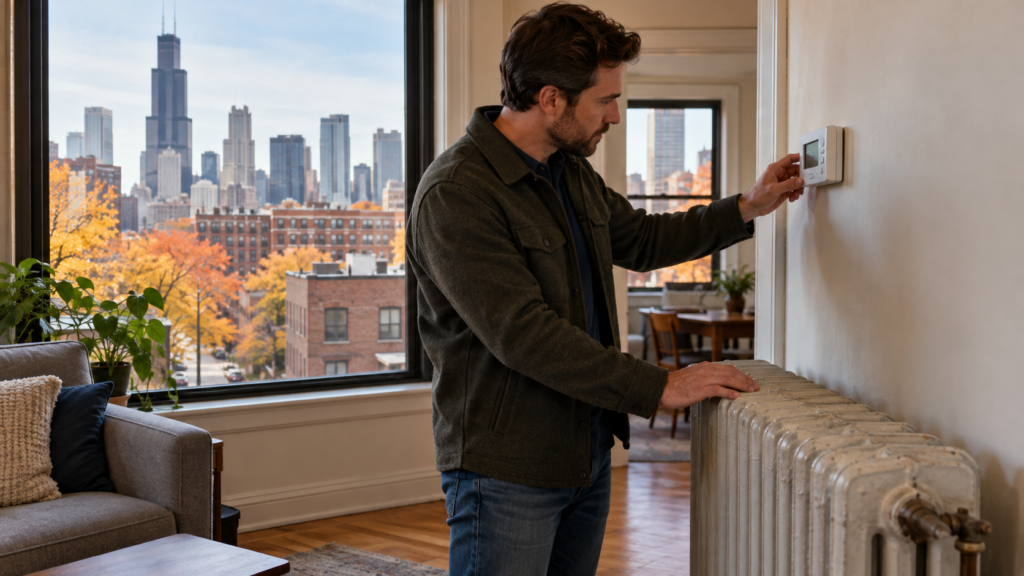
The Chicago heat ordinance is a practical operating rule for anyone managing a rental apartment through fall and winter. A boiler can run while a distant bedroom remains cold. A tenant can report a heating problem long before the equipment fails entirely. Landlords need to know the applicable minimum indoor temperatures, check the whole unit, and respond to complaints with a clear repair record.
The city’s heat season runs from September 15 through June 1. This guide focuses on how to prepare, measure, and document a response, rather than treating a working thermostat as proof that every room is comfortable.
Know the Temperature and Time Windows
Under the City of Chicago heat ordinance guidance, most rental residences must be at least 68°F from 8:30 a.m. to 10:30 p.m. and at least 66°F from 10:30 p.m. to 8:30 a.m. during heat season. The city lists special transition rules for some two-pipe heating and cooling systems in the first and last month of the season. The standard concerns the indoor temperature tenants actually receive. A scheduled boiler setting or utility bill cannot establish the temperature in a specific apartment.
The city says portable space heaters cannot be used to satisfy the minimum heat requirement. A temporary heater may help during an urgent repair, but it should not replace a compliant, reliable heating system or become the default solution to recurring cold rooms.
Inspect Before the First Cold Night
Schedule system service before heat season, then test the equipment under real operating conditions. Check controls, distribution to the farthest units, radiators or vents, and any signs of leaks or blocked airflow. Confirm who can enter mechanical spaces and how an after-hours repair request reaches the right person.
In a multiunit building, one hot lobby or first-floor unit does not prove that upper floors meet the standard. Ask tenants to report rooms that remain cold even when the system is on. A property manager should know which technician to call, who approves emergency work, and how to communicate a realistic update. PropertyTale’s repair audit guide offers a way to review the management process.
Measure the Problem in the Affected Unit
When a tenant reports inadequate heat, record the date, time, unit, room, thermostat reading, and any relevant weather or system information. Measure in the living space with a reliable thermometer and note whether the equipment was operating. Repeat readings after a repair at a time that reflects the problem reported, including the night window when appropriate.
A single reading is a snapshot. It is useful evidence, but a complaint about repeated evening outages needs a pattern of checks. Avoid asking the tenant to tolerate unsafe conditions while waiting for a convenient appointment. Communicate how to reach management if temperatures worsen and arrange prompt professional service.
Document Repairs and Follow Through
Keep the work order, technician’s diagnosis, parts and service dates, tenant updates, and post-repair readings. If the heat source serves several units, identify which apartments may be affected and check them as well. An invoice stating “boiler repaired” does not alone show that the minimum indoor temperature was restored everywhere.
PropertyTale’s maintenance budget guide can help reserve funds for heating work. Set aside contingency for urgent calls, especially when an older system needs a part that may not be immediately available. The budget is useful only if the response process also gets the heat restored.
Take Tenant Reports Seriously
Chicago residents can report inadequate heat to 311. The city’s 311 heat ordinance page sets out the seasonal standard, and its Renting Right booklet summarizes renter rights. A landlord should respond to a report as an operational and safety issue, regardless of whether an inspector has visited.
Do not turn a heat complaint into a dispute over the tenant’s use of the apartment without checking the system first. If access is needed, follow applicable notice rules and document attempts to arrange it. If the problem involves a utility outage or equipment outside your direct control, contact the relevant party while keeping the tenant informed of next steps.
Build a Repeatable Heat-Season Record
At the start of each season, retain service records and a clear emergency contact plan. During a complaint, log readings, actions, and updates. After a repair, verify the affected rooms and close the work order only when the system is performing. This sequence is more useful than a stack of invoices without temperature evidence.
For owners deciding whether to manage the building personally, PropertyTale’s property management comparison highlights the ongoing response work. Chicago’s heat standard applies to the rental home either way; delegation does not remove the need to know whether the tenant received sufficient heat.
Note: This article is general information, not legal, engineering, or safety advice. City rules and the facts of a particular building can change. Confirm current Chicago heat requirements with the City of Chicago and use qualified heating professionals for system diagnosis and repair.