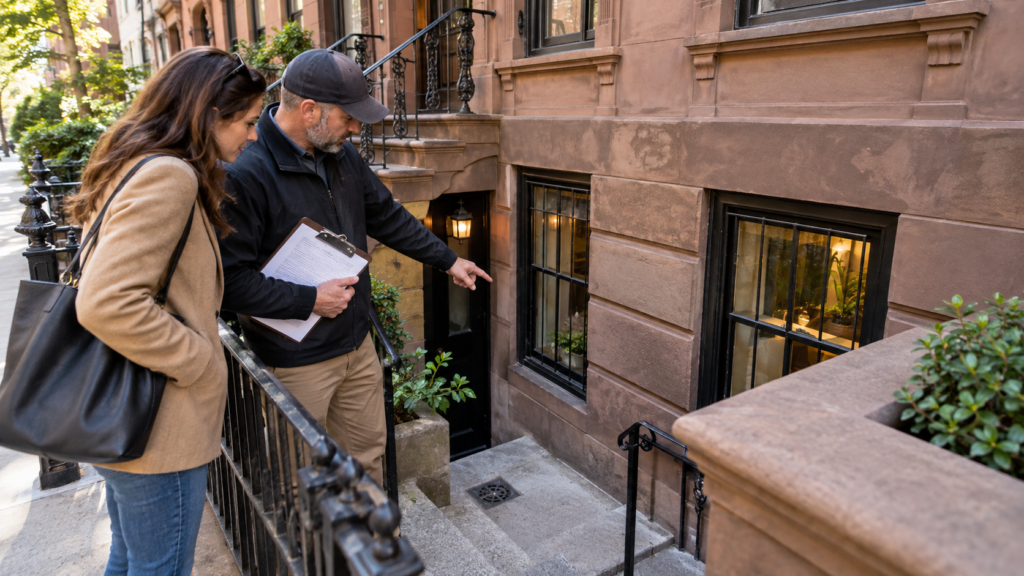
NYC basement apartments can look like an easy way to offset a mortgage. A finished lower level may have a kitchen, private entrance, and even a current occupant. None of those features proves that the space is an approved dwelling. Before a buyer pays for an extra unit in the asking price, the legal use of the building and the physical conditions of the lower level need separate checks.
The difference matters for financing, insurance, rental income, safety, and future resale. A listing description is a starting point for questions, not proof of permission to rent.
Start With the Legal Unit Count
Ask the seller for the building’s Certificate of Occupancy and compare it with the advertised unit count. The New York City Department of Housing Preservation and Development says that a basement or cellar must meet minimum conditions for light, air, sanitation, and egress and receive Department of Buildings approval before it can be lawfully rented or occupied. A second kitchen or separate utility meter does not substitute for that approval.
Search the Department of Buildings records for the legal use, Certificate of Occupancy, and signs of an unapproved conversion. If the property predates modern certificate requirements, ask a qualified local professional which official records establish the authorized use. Compare those records to the floor plan and leases. A three-unit marketing description next to a two-family occupancy record is a material question, not a minor paperwork mismatch.
Distinguish a Basement From a Cellar
New York City uses technical definitions for basement and cellar space. Buyers should avoid deciding which category applies from a listing photo or a seller’s informal description. The amount of the level below grade, ceiling height, windows, and exits can change which rules apply. Have the actual space and plans reviewed against current city requirements before assuming a conversion is possible.
Look at every occupied room. Does it have safe access to an exit? Is the bedroom really approved sleeping space? Does rainwater collect at the stairwell or window well? These questions are relevant even when the seller says a prior tenant lived there without a complaint. PropertyTale’s house viewing guide can help organize the physical inspection, but the city record check answers a different question.
Check Permits and Open Violations
Request permits and sign-offs for the kitchen, bathroom, partition work, electrical changes, and any added entrance. A permit application is not the same as final approval. Review open complaints and violations with the Department of Buildings and ask whether the work shown on site matches the approved plans. A later buyer may inherit the practical cost of correcting a discrepancy even if the seller performed the work years earlier.
The city explains that an illegal conversion can add a dwelling without DOB approval. That can require removing work or pursuing a compliant legalization path. Get a written scope and realistic cost estimate from appropriate design and construction professionals before treating the lower unit’s projected rent as certain.
Do Not Assume a Pilot Program Solves It
New York City has enacted newer pathways for some accessory dwelling units and certain existing subgrade apartments. Eligibility is limited by location and technical requirements. The city’s ADU guidance describes separate rules for new units and the pilot legalization process; it also states that pilot applications are not currently accepted until rules are promulgated. A buyer should check the current program status, address eligibility, required construction, and eventual amended Certificate of Occupancy rather than pricing in automatic approval.
Flood exposure is especially important for a below-grade unit. Ask whether the property falls within a mapped flood-risk area, review previous water entry and drainage repairs, and consider how a subgrade exit would function in an emergency. A dry showing is only one observation. PropertyTale’s New York rental flood notice guide covers disclosure duties for a separate stage of ownership.
Keep the Purchase Math Honest
Ask the lender and insurer how they will treat the lower level under the documented legal use. Model the purchase both with and without the proposed apartment’s rent. If the deal only works when an unapproved room generates income, the buyer is taking a regulatory and financial risk that should be visible before an offer becomes firm.
Discuss document requests and any inspection or financing contingencies with the appropriate advisers while contract terms can still be negotiated. PropertyTale’s post-offer guide explains the broader sequence. For this property, specifically ask for the certificate or older official occupancy evidence, permit history, open violations, current leases, and evidence of water intrusion. Bring the records and the actual layout together; neither tells the full story alone.
Note: This article is general information, not legal, engineering, financing, or insurance advice. NYC rules and program availability can change. Confirm the current status of a specific property with the Department of Buildings, HPD, and qualified local advisers before buying or renting a lower-level space.