At a Phoenix rental with a backyard pool, the days between tenants are an opportunity to check every route into the water. A gate that worked at the last inspection may now drag on the ground, fail to latch, or be held open by landscaping equipment. Phoenix rental pool barriers deserve their own turnover review before keys change hands, alongside the usual cleaning and repair work.
This is a practical inspection, not a substitute for an approved barrier plan or a city inspection. The City of Phoenix pool barrier requirements describe the fence, gate, and house-access options that may apply. Keep the approved configuration in mind while walking the actual path a person could take from the street, the house, and neighboring areas to the pool.
Start With the Approved Barrier Layout
Find the pool permit and barrier records before assuming the visible fence is the whole safety system. Phoenix describes an exterior separation from neighboring properties and several ways to provide a barrier between the residence and pool. An inner fence, the house wall with protected openings, or an approved motorized safety cover may be part of a property’s approved arrangement. The correct turnover checklist depends on which arrangement was inspected and approved.
Walk the full perimeter rather than examining only the most-used patio gate. Look for a new gap where soil settled, a panel loosened, or equipment was moved through the fence. A tenant’s decorative additions, stored furniture, or landscaping can also create a route over or around an otherwise intact barrier. The city publication lists a five-foot fence height measured from the exterior side and limits openings and clearance beneath the barrier; it has more specific rules for mesh and other designs. Record a suspected defect rather than guessing that a measurement is close enough.
Test Each Gate as It Will Be Used
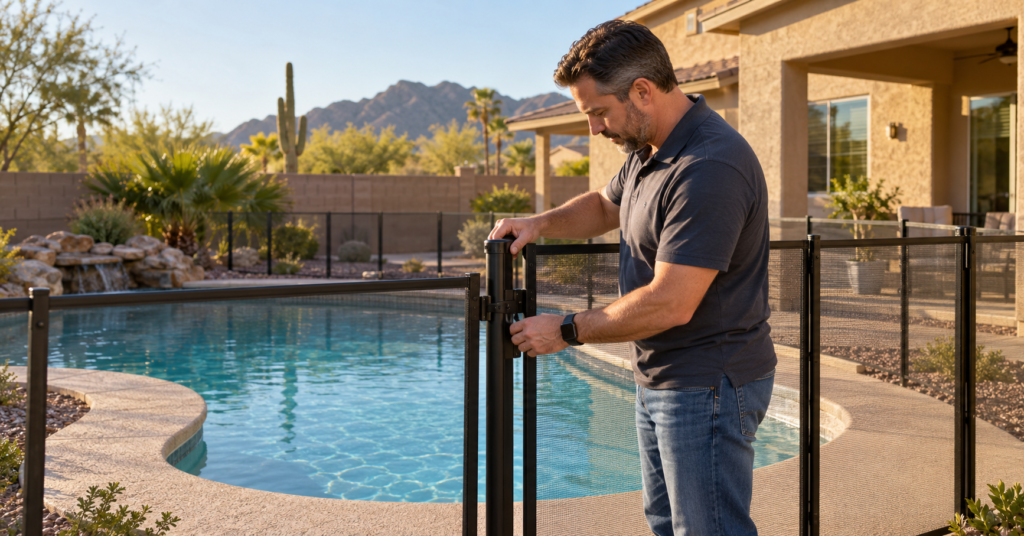
Open each pedestrian gate from several positions and let it close on its own. Watch whether it reaches the latch without a push, rebounds, catches on a stone, or stops short when a breeze moves it. Check that the latch engages, the gate opens away from the pool, and the hardware can accommodate a lock as the Phoenix guidance describes. Do not rely on a gate being locked during a showing as proof that its self-closing and self-latching functions work.
Test again after any adjustment and photograph the finished condition. Side gates and wider access gates deserve attention too, particularly if a vendor used them during turnover. The city identifies additional requirements for non-pedestrian gates over four feet wide. A temporary chain, prop, or improvised latch should be treated as an unresolved access problem, not a finished repair.
Check Doors, Windows, and Pet Openings
When the home itself forms part of the approved barrier, the inspection extends indoors. Phoenix’s guidance calls for doors leading directly to the pool area to self-close and self-latch, and it addresses sliding glass doors and window latches separately. A patio door that has become hard to slide or a closer removed during painting can undermine the approved arrangement. The city also says animal doors are not allowed in this configuration.
Identify every opening from the living area to the pool, including a less obvious bedroom or utility-room route. Compare the installed hardware with the approved documents and current city guidance. An old door alarm, a removable pin, or a cover visible in the yard should not be assumed to replace the specific barrier method approved for that property. If the records are missing or the design has changed, ask Phoenix Planning & Development what review is needed before treating the property as ready for occupancy.
Separate Routine Upkeep From Changes Requiring a Permit
A turnover can reveal a bent panel, failed hinge, damaged latch, or a planned change to the fence line. The Phoenix publication says a new permit is required to enlarge, alter, repair, remove, convert, or replace an existing approved pool barrier. That wording is broad enough that an owner should confirm the city’s requirements before directing barrier work, especially when a contractor proposes a different gate, fence, cover, or house-access arrangement.
Keep the pool-access issue on the repair list with a responsible person and completion date. PropertyTale’s guide to a property manager repair audit offers a useful way to reconcile work orders, invoices, and final photos. For longer-term planning, a rental property maintenance budget should allow for inspections and unexpected safety repairs rather than treating barrier hardware as a one-time expense.
Document the Turnover Before the New Lease Begins
Use a dated record for each gate, barrier segment, and direct access point from the home. Note what was tested, what failed, who performed corrective work, and when the final test passed. Photos are helpful, but a photo of a closed gate cannot show that it closes and latches unaided; the written record should describe the functional test. Keep permit correspondence and inspection outcomes with the property file.
Arizona law also addresses notice to a person who rents or leases a dwelling with a pool. Review the current Arizona pool enclosure statute and obtain appropriate lease guidance for the required safety-education notice. A tenant handoff can explain how gates should be kept closed and how a malfunction should be reported promptly, without shifting the owner’s inspection responsibility onto the tenant.
Do Not Assume an Age-Based Exception Applies
Some older single-family pools may have a limited interior-barrier exception, but it depends on the circumstances and does not remove the exterior-fencing requirement. Phoenix’s pool policy explanation distinguishes older single-family properties from apartments and multifamily dwellings and notes an occupant-age condition for the older-home exception. Tenants change, and an exception that seemed relevant under a previous occupancy may not fit the next one.
That is why a lease turnover should trigger a fresh review of the approved pool barrier layout and current use of the home. If an owner is unsure whether an exception applies, get a determination from the city rather than relying on the prior tenant’s household details. The same caution applies to a safety cover or an above-ground pool: eligibility turns on the actual approved design and applicable rules.
A Final Walk Before Keys Change Hands
Perform one last walk after cleaners, landscapers, painters, and pool workers have left. Verify that no gate was propped open, no latch was removed, and no furniture or bin creates a climbable route. Test the closing action again from the positions a new occupant will use. Then place the records and any city response in the turnover file so the next inspection starts with the right baseline.
Phoenix rental pool barriers are a continuing property condition, not a box to check once at construction. A careful between-tenant review makes defects visible while there is still time to address them and gives the incoming household clear information about the pool’s access points.
Note: This article is general information, not legal, engineering, or code-compliance advice. Requirements can depend on the pool’s age and approved design. Confirm the current rules and any permit or inspection needs with the City of Phoenix before changing a barrier or leasing the property.