
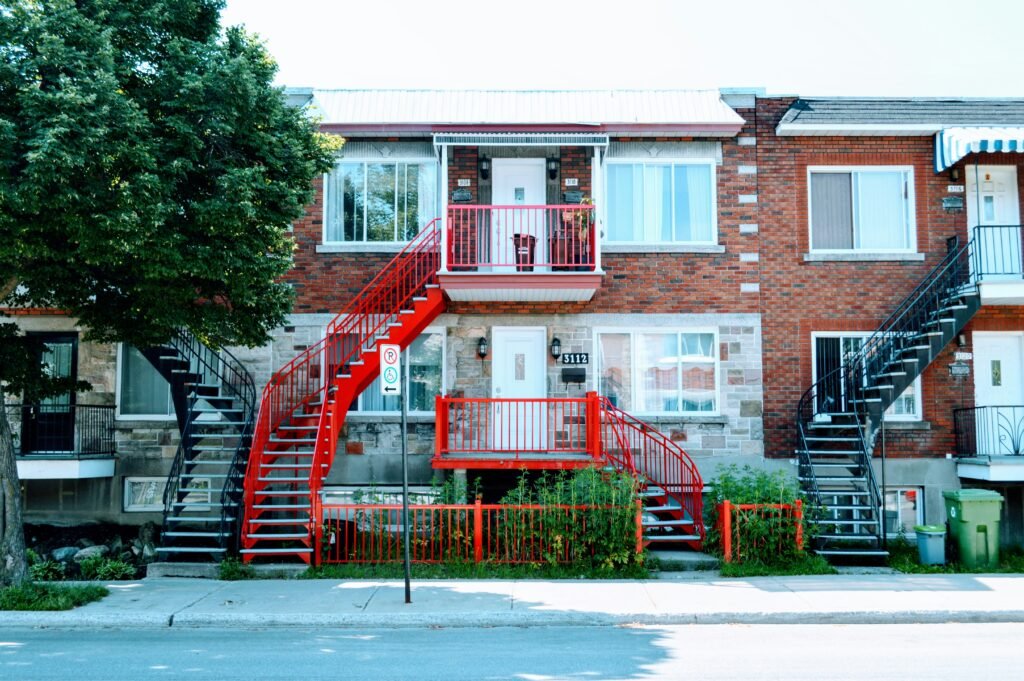
Cleveland duplex utilities can materially affect rental income, operating expenses and the future value of a property. Before purchasing a duplex, investors should determine whether each unit has separate water, gas and electric service—or whether tenants share meters, equipment or parts of the building’s utility systems.
Two visible electric panels do not necessarily mean that every circuit is properly separated. A duplex may have separate electric meters but share a furnace, water heater or water meter. Common-area lights might also be connected to a tenant’s meter.
These arrangements are not always deal breakers. The risk comes from buying without knowing who pays each bill, how consumption is measured and what it would cost to correct an unsuitable setup.
Quick Answer: What Should Investors Verify?
Before buying a Cleveland duplex, an investor should verify:
- The number of electric, gas and water meters
- Which meter serves each unit
- Whether common areas have separate service
- Whether circuits cross between units
- Whether heating and cooling systems are shared
- How domestic hot water is supplied
- Who currently pays each utility bill
- At least 12 months of historical utility costs
- Whether current leases include utilities
- Whether tenants are billed using a written formula
- Whether utility separation would require new equipment
- Whether previous alterations were permitted
- The property’s legal occupancy and unit count
- Cleveland rental-registration status
- Lead-safe certification status
- How utilities affect projected cash flow
An investor should obtain written findings instead of relying on the listing description or a seller’s statement that utilities are “separate.”
Why Utilities Matter to a Cleveland Duplex Investment
Duplexes are often purchased because two rental units can produce income from one property. That financial advantage becomes less predictable when the landlord pays expenses that vary with tenant behavior.
Shared utilities can affect:
- Net operating income
- Monthly cash flow
- Rent-setting decisions
- Tenant disputes
- Lease administration
- Property-management workload
- Renovation expenses
- Resale value
- Financing assumptions
- Future utility-rate exposure
A property may appear to meet an investor’s cash-flow target when the analysis excludes landlord-paid water, gas or electricity. Adding those expenses can change the investment substantially.
Before making an offer, investors should calculate returns using actual utility records. Property Tale’s guide to calculating rental property cash flow explains how recurring operating costs affect projected performance.
What Does “Separate Utilities” Actually Mean?
A listing may advertise separate utilities without explaining which services are separated.
“Separate utilities” could mean:
- Each unit has its own electric meter, but gas and water are shared
- Electricity and gas are separate, but the owner pays water
- Each unit has separate meters but shares one heating system
- Each unit has a separate furnace but shares domestic hot water
- Tenants have separate panels, but some circuits are crossed
- One unit’s meter supplies basement or exterior lighting
- Utility lines are separated, but the accounts remain in the owner’s name
The buyer should ask the seller or listing agent to specify the arrangement for every utility. That description should then be independently verified during inspections.
Create a Utility Map for the Property
A simple utility map can prevent confusion. It should identify every meter, shutoff, panel and major piece of equipment.
| Component | Unit 1 | Unit 2 | Common area |
|---|---|---|---|
| Electric meter | Separate or shared | Separate or shared | Identify supplying meter |
| Electrical panel | Dedicated or crossed | Dedicated or crossed | Identify supplying panel |
| Gas meter | Separate or shared | Separate or shared | Identify supplying meter |
| Furnace or boiler | Dedicated or shared | Dedicated or shared | Note common piping |
| Water meter | Separate or shared | Separate or shared | Identify owner account |
| Water heater | Dedicated or shared | Dedicated or shared | Note fuel source |
| Laundry | Tenant or shared service | Tenant or shared service | Identify supplying meter |
| Exterior lighting | Not applicable | Not applicable | Identify supplying meter |
The completed map should show more than the number of meters. It should establish what each meter and system actually serves.
Inspect the Electrical Setup
Older duplexes and properties converted from single-family use may contain electrical arrangements that are not obvious at the panels.
An electrician may need to determine whether:
- Each unit has a dedicated meter
- Each meter connects to the expected panel
- Circuits cross between units
- One unit powers another unit’s outlets
- Hallway, basement or exterior lighting uses a tenant’s meter
- Laundry equipment is connected to a tenant’s panel
- Panels have sufficient capacity
- Wiring alterations were properly completed
- A separate landlord or house meter is feasible
- Electrical work would require broader upgrades
Turning off breakers systematically can help identify which fixtures and outlets each panel controls, but electrical evaluation should be performed safely by a qualified professional.
Why crossed circuits matter
Suppose the second-floor tenant pays an individual electric bill but unknowingly supplies the basement lights and another tenant’s laundry equipment. That arrangement can create disputes and undermine the investor’s claim that utilities are independently metered.
Crossed circuits may also indicate informal conversion work. The investor should determine whether the property was legally established and whether relevant electrical work appears in the permit history.
Examine Gas Service and Heating Equipment
Separate gas meters do not necessarily mean that each unit has independent heat.
A Cleveland duplex might have:
- One boiler serving both units
- Separate furnaces connected to separate meters
- Two furnaces supplied by one gas meter
- A shared boiler with limited temperature control
- One thermostat controlling both units
- Separate heat but a shared gas water heater
Investors should identify:
- The meter supplying each appliance
- The location and condition of furnaces or boilers
- The number and location of thermostats
- Whether units can control their own temperatures
- The age and service history of the equipment
- Whether distribution piping or ductwork crosses units
- Whether combustion-air and venting conditions need evaluation
- Whether separation would require additional equipment or construction
Shared heating can create comfort complaints when one unit becomes too warm while the other remains cold. Including heat in the rent does not eliminate this operational problem.
Confirm the Water and Sewer Arrangement
A duplex may have one water meter even when gas and electricity are completely separated. Investors should determine which party holds the account and how current leases address the expense.
Review:
- The number of water meters
- Account responsibility
- Historical consumption
- Seasonal variation
- Unexplained usage spikes
- Running toilets or leaking fixtures
- Exterior faucet access
- Laundry use
- Sewer charges
- Past-due balances
- Whether the seller has informally divided bills
An investor should not assume that a 50-50 split is automatically appropriate or legally enforceable. Occupancy, unit size, lease terms and applicable billing rules may affect the arrangement. Obtain local legal guidance before charging tenants for a shared utility.
Request Historical Utility Bills
Seller estimates are less useful than actual records. Request at least 12 months of bills and preferably 24 months when available.
Historical statements can reveal:
- Winter heating expenses
- Summer electricity usage
- Water leaks
- Rate increases
- Estimated meter readings
- Vacant-period consumption
- Unusual spikes
- Payment delinquencies
- Budget-billing adjustments
- Service interruptions
The investor should also ask which units were occupied during each billing period. A low annual utility cost may reflect a vacancy rather than efficient operation.
Normalize the information by month and occupancy. If one unit was vacant for six months, the annual total should not be inserted unchanged into a fully occupied projection.
Determine Who Currently Pays Each Bill
Review current leases rather than assuming the seller’s billing practice is enforceable.
The property may use one of several arrangements:
Tenants open individual utility accounts
This is generally the most straightforward arrangement when the systems are genuinely separated. Investors should verify which utilities can be transferred directly into each tenant’s name.
The landlord includes utilities in the rent
The investor pays the bills and sets rent with expected consumption in mind. This simplifies billing but transfers the risk of high consumption and rising rates to the owner.
The landlord charges a flat utility amount
A fixed monthly charge may provide more predictability, but the lease should clearly explain the charge. Investors should obtain local legal advice before adopting or continuing this method.
The landlord allocates a shared bill
The owner pays the utility provider and divides the bill using a formula. This can require detailed administration and may create disputes when tenants question the calculation.
The arrangement is informal
A tenant may send the owner half of a bill without any supporting lease language. Informal arrangements should not be treated as dependable investment income.
Review Every Existing Lease
A buyer generally acquires a rental property with existing tenancies and contractual obligations. The new owner may not be able to change utility responsibility immediately.
Review each lease for:
- Utilities included in rent
- Utilities assigned to the tenant
- Flat monthly charges
- Allocation formulas
- Billing deadlines
- Late-payment provisions
- Access to meters
- Temperature-control responsibilities
- Lease renewal dates
- Rent-adjustment limits or notice requirements
- Conflicting amendments or side agreements
Compare the leases with actual practice. If the lease says a tenant pays gas but the landlord’s records show the owner has always paid it, ask why.
Security-deposit records, rent ledgers and utility correspondence may provide additional context.
Inspect for Hidden Shared Loads
Common-area electricity is a frequent source of confusion. A duplex may not have a separate landlord meter, so one tenant’s account supplies equipment used by both units.
Possible shared loads include:
- Basement lighting
- Hallway lighting
- Exterior lights
- Garage power
- Laundry machines
- Sump pumps
- Security equipment
- Internet equipment
- Shared freezers
- Outdoor receptacles
- Heating equipment
- Water heaters
An investor should trace these loads before deciding that the utility systems are adequately separated.
A small shared light may appear insignificant, but the principle becomes more important when the tenant’s meter supplies a sump pump, laundry room or central heating equipment.
Verify That the Property Is Legally a Duplex
Two kitchens and two sets of tenants do not prove that the property is legally recognized as a two-family residence.
Compare:
- Cuyahoga County property records
- Cleveland occupancy records
- Rental registration
- Building permits
- Certificate of occupancy
- Number of legal dwelling units
- Electrical and plumbing permits
- Seller representations
- Physical configuration
The City of Cleveland explains that a Certificate of Occupancy identifies a building’s legal use and relevant occupancy conditions.
If records describe a single-family home while the property operates as two apartments, the investor should investigate before relying on duplex-level rent.
Utility separation work may expose earlier unpermitted conversions and lead to additional requirements.
Check Cleveland Rental Registration
Cleveland requires rental-property owners to obtain the appropriate rental registration and Certificate Approving Rental Occupancy to rent in good standing with the city.
According to the city’s rental-registration guidance, approval can require documentation addressing code compliance, property taxes, lead-safe certification and a local agent when applicable.
Before purchasing, determine:
- Whether the property is currently registered
- Whether a valid rental-occupancy certificate exists
- Whether open code violations remain
- Whether city fees or bills are outstanding
- Whether property taxes are current or covered by an approved plan
- Whether lead-safe requirements have been satisfied
- Whether an out-of-area buyer must appoint a Local Agent-in-Charge
- Which requirements must be completed after ownership transfers
Utility configuration is only one part of the investment. A duplex that cannot be rented in good standing could lose income while the new owner addresses compliance issues.
Account for Cleveland Lead-Safe Requirements
Cleveland rental properties must comply with the city’s lead-safe requirements. This deserves attention when evaluating older duplexes because electrical or plumbing separation work may disturb painted surfaces.
Investors should confirm:
- The property’s lead-safe certification status
- The certification period
- Whether lead hazards remain unresolved
- Whether planned utility work will disturb covered surfaces
- Whether contractors must follow lead-safe work practices
- Whether new certification or assessment will be required
The city provides current information through its Lead Safe Program.
Do not treat utility-separation estimates as complete if they exclude wall repair, painting or lead-safe procedures.
Estimate the Real Cost of Separating Utilities
There is no dependable flat price for separating Cleveland duplex utilities. The cost depends on the existing configuration and the extent of construction required.
Potential work can include:
- Installing new electric service or meters
- Adding or replacing electrical panels
- Rewiring crossed circuits
- Installing a common-area meter
- Dividing gas service
- Installing an additional furnace or boiler
- Separating heating zones
- Adding a second water heater
- Installing new water service
- Separating plumbing lines
- Opening and repairing walls
- Obtaining permits and inspections
- Addressing outdated systems discovered during construction
Request written estimates from appropriately qualified professionals during the inspection period. Each estimate should state what is included, what remains unknown and whether related code upgrades could be triggered.
A low verbal estimate should not be used as the basis for a major investment decision.
Compare Separation With Landlord-Paid Utilities
Separating every system is not automatically the best financial decision. Investors should compare the capital cost against the ongoing cost and administrative burden of keeping utilities shared.
Consider:
- Expected annual utility expense
- Anticipated rate increases
- Tenant consumption risk
- Remaining equipment life
- Separation cost
- Permit and restoration expenses
- Expected ownership period
- Potential rent difference
- Reduced management time
- Effect on resale
- Financing available for improvements
For example, an expensive water-service separation may not produce enough additional rent or savings to justify the work. Separating crossed electrical circuits may be more urgent because of billing fairness, safety or compliance concerns.
Evaluate each utility independently rather than choosing an all-or-nothing approach.
Adjust the Cash-Flow Analysis
When utilities are shared, include a realistic owner-paid allowance in the property’s underwriting.
A simple calculation is:
Effective rental income − vacancy − operating expenses − landlord-paid utilities − debt service = projected cash flow
Use actual bills as the starting point, then adjust for:
- Full occupancy
- Current rates
- Expected increases
- Maintenance
- Seasonal weather
- Unit size
- Equipment efficiency
- Anticipated rent changes
Investors should also maintain a contingency for unexpected utility spikes. A running toilet, failed boiler control or unusually cold period can temporarily increase costs.
Property Tale’s guide to hidden rental property expenses can help investors identify additional costs that may be missing from a seller’s income statement.
Do Not Rely Exclusively on the Seller’s Pro Forma
A seller’s pro forma presents projected performance, not necessarily verified historical results.
It may assume:
- Tenants will begin paying utilities
- Rents can be raised immediately
- Utility separation will be inexpensive
- Current consumption will remain unchanged
- Deferred maintenance will not affect operating costs
- Every unit is legally rentable
- No vacancy will occur during renovations
Build an independent projection using leases, utility statements, registration records and inspection results.
If the investment works only when every optimistic assumption is accepted, the margin for error may be too narrow.
Questions to Ask Before Making an Offer
A Cleveland duplex investor should ask:
- Are gas, electricity and water separately metered?
- Which meters serve each unit?
- What supplies common-area lights and equipment?
- Are any circuits crossed?
- Does each unit have separate heat and temperature control?
- Does each unit have its own water heater?
- Who pays each utility under the current leases?
- Can the seller provide 12 to 24 months of bills?
- Are there unpaid balances?
- Was utility-separation work permitted?
- Is the property legally recognized as a duplex?
- Is the rental registration current?
- Does the property have a Certificate Approving Rental Occupancy?
- Is the property lead-safe compliant?
- Are there open building or housing violations?
- What would it cost to correct the current arrangement?
Answers should be supported by documents and physical inspection findings.
Red Flags for Duplex Investors
Additional investigation is warranted when:
- The listing says “separate utilities” without details
- The seller cannot provide utility bills
- Panels or meters lack clear identification
- One thermostat controls both units
- Common areas use a tenant’s meter
- Leases conflict with current billing practices
- Water usage is unusually high
- The property’s recorded use does not match its layout
- Utility work has no corresponding permit history
- The rental registration is expired or missing
- Open violations remain
- The property lacks required lead-safe documentation
- Estimates exclude restoration or related upgrades
- Projected cash flow ignores owner-paid utilities
One issue may be manageable. Several unresolved issues can change the economics of the acquisition.
Cleveland Duplex Utility Due-Diligence Checklist
| Due-diligence item | Evidence to obtain |
|---|---|
| Electric service | Meter count, panel schedule and electrician’s findings |
| Gas service | Meter count and equipment connections |
| Water service | Meter information and billing history |
| Heating | Equipment count, controls and service records |
| Hot water | Water-heater count and fuel connections |
| Common areas | Identification of supplying meters |
| Tenant obligations | Signed leases and amendments |
| Historical costs | At least 12 months of bills |
| Legal use | Occupancy and property records |
| Rental compliance | Registration and rental-occupancy certificate |
| Lead safety | Current certification records |
| Planned separation | Written contractor estimates and permit review |
| Investment performance | Independent cash-flow calculation |
Complete this review before the inspection and financing deadlines expire whenever possible.
Frequently Asked Questions
Are utilities usually separate in a Cleveland duplex?
There is no universal arrangement. Some duplexes have fully separate gas and electric systems but one water meter. Others share heating, hot water or electrical loads. The specific property must be inspected.
Can a Cleveland landlord divide a shared utility bill between tenants?
The answer depends on the utility, lease language, billing method and applicable rules. Investors should obtain qualified local legal guidance before establishing a tenant reimbursement system.
Is one water meter a deal breaker?
Not necessarily. Many multifamily properties operate with landlord-paid water. Investors should examine actual costs, lease provisions, account responsibility and the feasibility of separation.
What is a landlord meter?
A landlord or house meter supplies common areas or shared equipment rather than an individual tenant’s unit. Whether one can be added depends on the property’s existing electrical service and configuration.
Should an investor separate utilities before renting?
It depends on cost, current leases, system condition and expected financial benefit. Safety, billing fairness and code concerns should be addressed before purely financial considerations.
Can tenants place separately metered utilities in their own names?
Often they can, but the investor should confirm the provider’s account requirements and ensure that each meter exclusively serves the correct unit.
Why should buyers verify rental registration before closing?
Registration problems, open violations or missing certifications could delay legal rental operations and reduce expected income after acquisition.
Utility Due Diligence Protects Investment Returns
Cleveland duplex utilities should be examined as part of the property’s financial and physical due diligence. Meter count, equipment configuration, lease obligations and historical bills all influence the true cost of operating the building.
The strongest investment analysis connects physical inspections with financial records. Investors should confirm which systems are shared, determine who legally and contractually pays for them, and obtain realistic estimates before assuming utilities can be separated easily.
A duplex with shared utilities may still produce solid returns. The investor simply needs to price the arrangement accurately and address unresolved compliance, billing and maintenance risks before buying.
Property Note: This article provides general educational information and is not legal, financial, electrical, plumbing, engineering or investment advice. Rental, utility and registration requirements can change and may vary by property. Investors should verify current Cleveland and Ohio requirements and consult qualified professionals before purchasing a duplex.